 WILO Mather Platt: No.1 channel partner in India consecutively from year 2015-2025
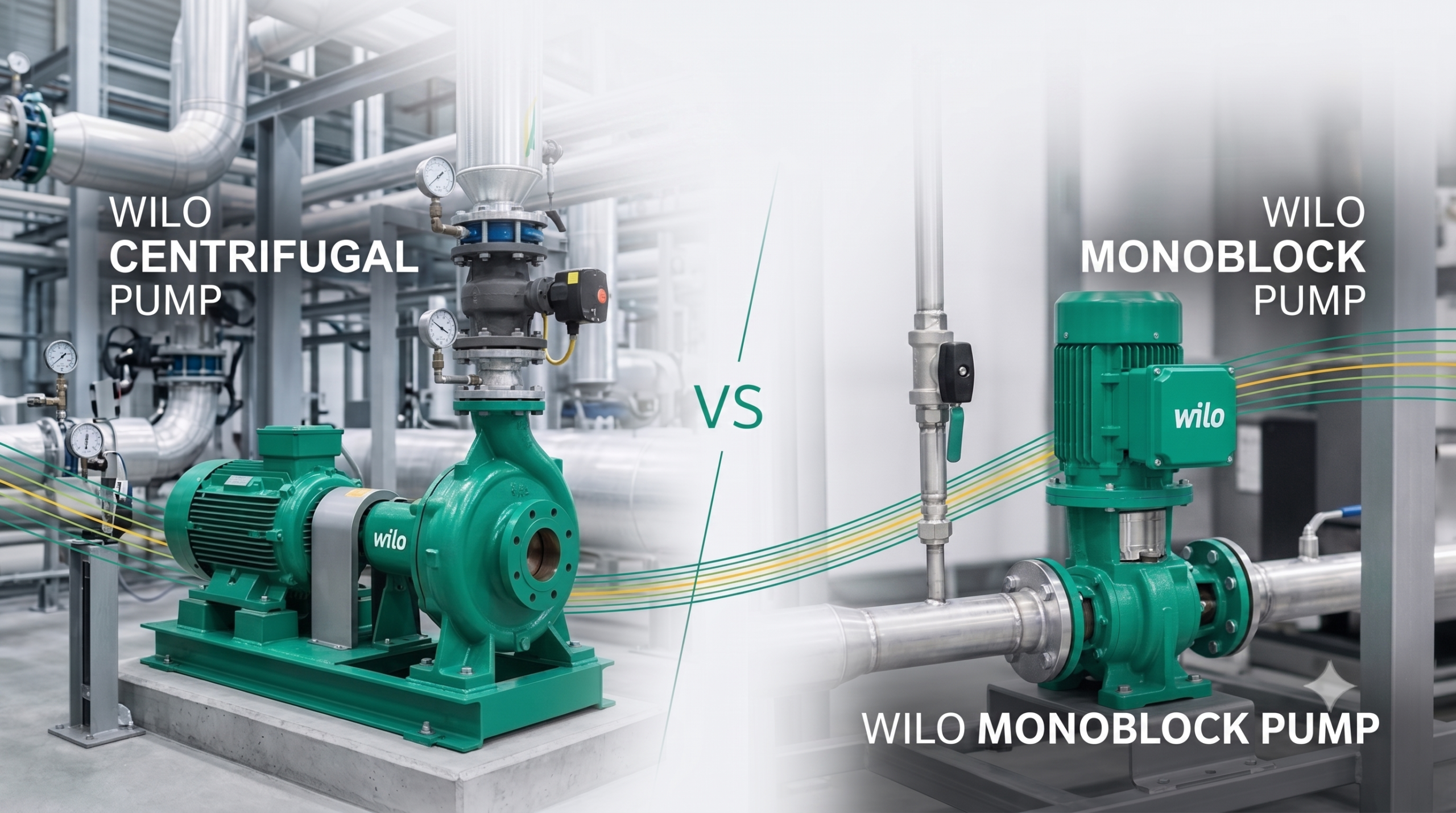
Selecting the right industrial pump is essential for achieving reliable system performance, energy efficiency, and long-term operational savings. Among the most commonly searched pumping solutions are the Wilo Centrifugal Pump and the Wilo Monoblock Pump. Although these terms are often used interchangeably, they are not exactly the same.
One of the biggest misconceptions is that a monoblock pump and a centrifugal pump are different pumping technologies. In reality, a Wilo Monoblock Pump is a type of centrifugal pump in which the pump and motor are integrated into a single compact unit. On the other hand, the term Wilo Centrifugal Pump refers to a broader category that includes several pump configurations such as end suction pumps, split case pumps, vertical inline pumps, close-coupled pumps, and monoblock pumps.
Understanding this distinction is important when selecting the most suitable pumping solution for commercial buildings, industrial processes, HVAC systems, water supply, fire protection, and infrastructure projects.
As an authorized distributor of Wilo Mather Platt, Vartak Pumps and Project Consultants supplies a comprehensive range of pumping solutions backed by technical consultation, product selection support, and dependable after-sales service. Whether you require a compact monoblock pump or a high-capacity centrifugal pump, choosing the right equipment can improve efficiency, reduce operating costs, and ensure reliable performance throughout the system’s lifecycle.
In this comprehensive guide, we’ll explain the differences between a Wilo Centrifugal Pump and a Wilo Monoblock Pump, compare their features and applications, and help you determine which solution best suits your requirements.
What is a Wilo Centrifugal Pump?
A Wilo Centrifugal Pump is a dynamic pump designed to move liquids by converting the mechanical energy of a rotating impeller into hydraulic energy. As the impeller rotates at high speed, it creates centrifugal force that pushes the liquid outward from the center of the impeller toward the pump casing, generating the pressure required to transport the fluid through a piping system.
Centrifugal pumps are widely recognized for their reliable operation, simple design, and ability to handle a broad range of flow rates. Their versatility makes them suitable for water supply systems, industrial processing, HVAC installations, fire protection, cooling systems, and municipal infrastructure.
Depending on the application, Wilo centrifugal pumps are available in several configurations, including:
- End Suction Pumps
- Split Case Pumps
- Vertical Inline Pumps
- Monoblock Pumps
- Close-Coupled Pumps
- Fire Fighting Pumps
- Pressure Boosting Systems
Each configuration is engineered to meet specific hydraulic requirements while delivering efficient and dependable performance.
Key Features of Wilo Centrifugal Pumps
- High hydraulic efficiency
- Reliable and continuous operation
- Energy-efficient performance
- Wide operating range
- Low maintenance requirements
- Available in multiple configurations
- Suitable for commercial and industrial applications
- Designed for long service life
What is a Wilo Monoblock Pump?
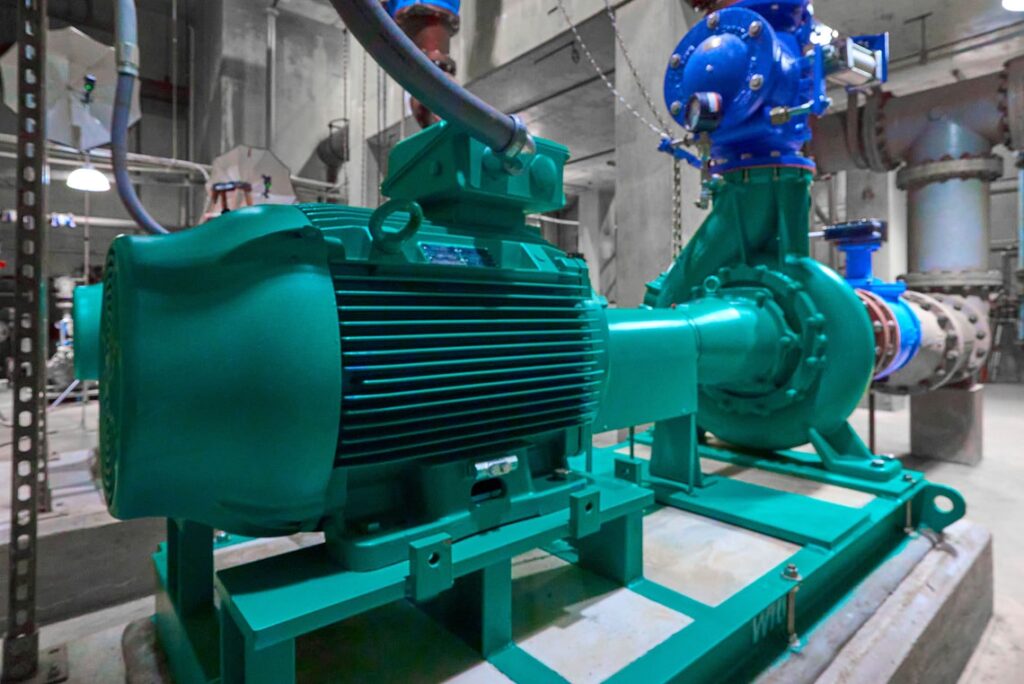
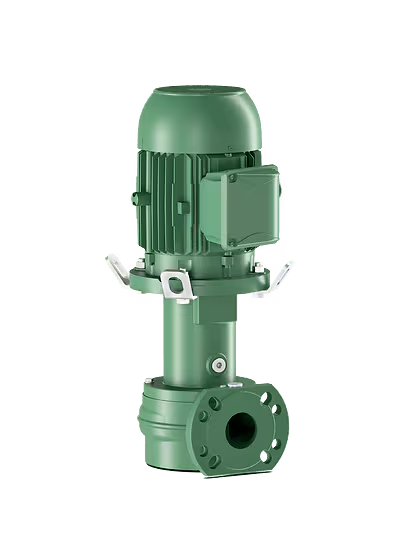
A Wilo Monoblock Pump is a compact type of centrifugal pump in which the pump casing and electric motor are integrated into a single unit with a common shaft. This integrated construction eliminates the need for coupling alignment, making installation simpler while reducing maintenance requirements.
Because of its compact footprint, a Wilo Monoblock Pump is widely used where space is limited and reliable water circulation is required. It is commonly installed in commercial buildings, residential complexes, industrial utilities, HVAC systems, pressure boosting applications, and water supply networks.
The integrated design also contributes to lower installation costs and easier servicing, making monoblock pumps a practical choice for many everyday pumping applications.
Key Features of Wilo Monoblock Pumps
- Compact integrated design
- Easy installation
- Space-saving construction
- Low maintenance
- Energy-efficient operation
- Reliable water circulation
- Smooth and quiet performance
- Suitable for continuous duty applications
Why Are These Pumps Often Confused?
One of the main reasons for confusion is that both products operate using the same centrifugal pumping principle.
A Wilo Monoblock Pump uses centrifugal force to move liquid, which technically makes it a centrifugal pump. However, not every centrifugal pump is a monoblock pump.
Think of it this way:
- Centrifugal Pump = Pump category
- Monoblock Pump = One specific type within that category
Understanding this relationship helps engineers, contractors, and facility managers choose the right equipment based on system requirements rather than terminology alone
How Does a Wilo Centrifugal Pump Work?
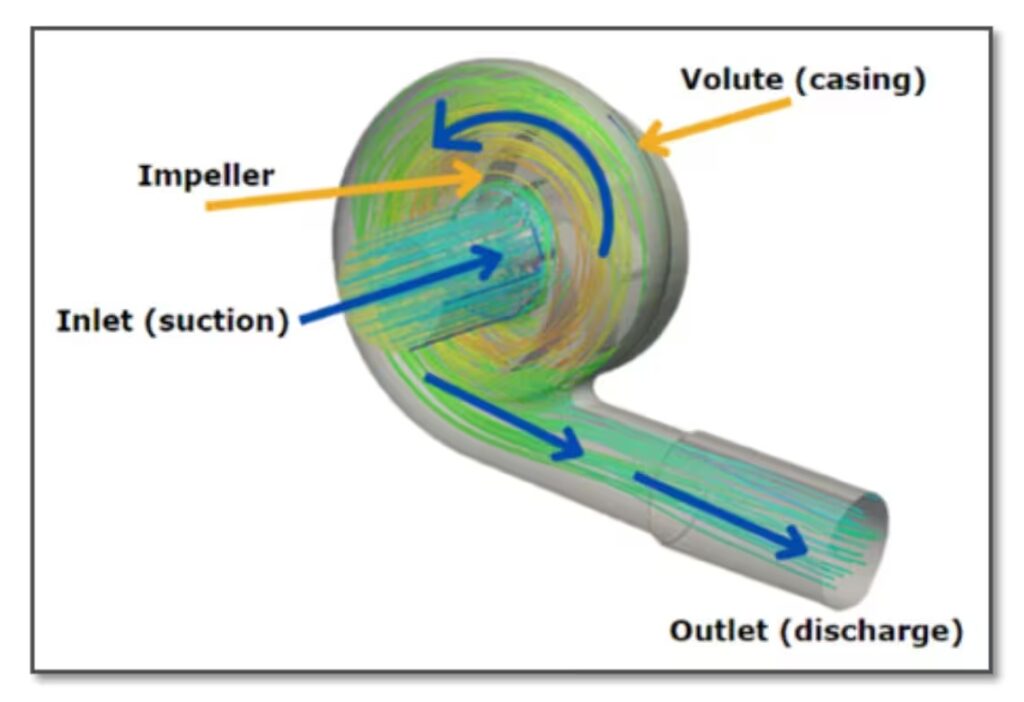
A Wilo Centrifugal Pump operates on the principle of centrifugal force. When the electric motor drives the impeller, the rotating impeller creates a low-pressure zone at the eye (centre) of the impeller, drawing liquid into the pump. As the liquid moves outward through the impeller vanes, its velocity increases. The pump casing then converts this velocity into pressure energy, enabling the fluid to flow through the piping system.
This simple yet highly efficient operating principle makes centrifugal pumps one of the most widely used pumping solutions for water supply, HVAC systems, industrial processing, fire protection, and municipal infrastructure.
Working Process
- Liquid enters the pump through the suction inlet.
- The rotating impeller accelerates the liquid using centrifugal force.
- The pump casing converts velocity into pressure.
- Pressurized liquid exits through the discharge outlet.
- Continuous rotation ensures a steady flow of fluid.
How Does a Wilo Monoblock Pump Work?
A Wilo Monoblock Pump uses the same centrifugal pumping principle but features an integrated construction where the pump and electric motor are mounted on a common shaft within a single compact unit.
When the motor rotates the impeller, the liquid is drawn into the pump and discharged under pressure. Because the motor and pump are permanently aligned, installation becomes simpler and maintenance associated with coupling alignment is eliminated.
This compact configuration makes monoblock pumps particularly suitable for commercial buildings, HVAC systems, water circulation, pressure boosting, and utility services where installation space is limited.
Wilo Centrifugal Pump vs Wilo Monoblock Pump
Although both pumps use centrifugal force to move liquids, their construction, installation requirements, and intended applications differ.
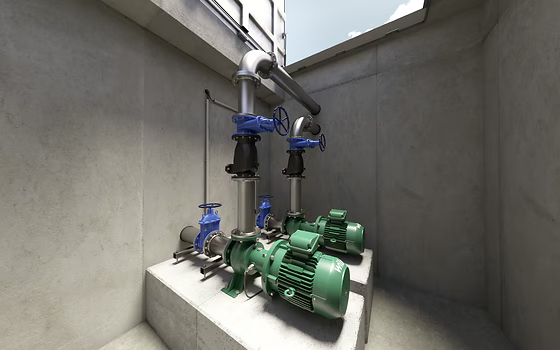
A Wilo Monoblock Pump is designed as a compact, integrated solution with the motor and pump mounted on a single shaft. In contrast, the term Wilo Centrifugal Pump encompasses a broader range of pump configurations, including end suction pumps, split case pumps, vertical inline pumps, close-coupled pumps, and monoblock pumps.
Understanding these distinctions helps engineers and plant operators select the most appropriate solution based on hydraulic performance, available space, maintenance strategy, and system requirements.
Wilo Centrifugal Pump vs Wilo Monoblock Pump: Comparison Table
| Feature | Wilo Centrifugal Pump | Wilo Monoblock Pump |
|---|---|---|
| Pump Category | Broad category of centrifugal pumps | A specific type of centrifugal pump |
| Construction | Multiple configurations available | Integrated pump and motor |
| Motor Position | Depends on pump design | Directly mounted on the pump |
| Shaft Alignment | May require alignment on some models | Factory-aligned |
| Installation | Varies by pump type | Simple and quick |
| Space Requirement | Depends on configuration | Compact footprint |
| Maintenance | Depends on design | Generally easier for routine servicing |
| Energy Efficiency | High | High |
| Hydraulic Performance | Wide operating range | Best suited for standard-duty applications |
| Flow Capacity | Low to very high | Low to medium (model dependent) |
| Pressure Capability | Wide range | Moderate (model dependent) |
| Applications | Industrial, commercial, municipal | Commercial, residential, HVAC, utilities |
| Flexibility | Multiple installation options | Compact, standardized design |
| Initial Investment | Depends on configuration | Often economical for many applications |
| Best Choice For | Diverse industrial requirements | Space-saving installations |
Key Differences Between Wilo Centrifugal Pumps and Wilo Monoblock Pumps
Although both products belong to the same pump family, understanding their differences helps ensure the correct equipment is selected for each application.
1. Design
The primary difference lies in construction.
A Wilo Centrifugal Pump may be supplied in several configurations depending on the application, whereas a Wilo Monoblock Pump integrates the pump and motor into one compact assembly.
2. Installation
Monoblock pumps are easier to install because the motor and pump are factory assembled on a common shaft.
Other centrifugal pump configurations may require additional alignment or installation procedures depending on the model.
3. Space Requirements
Where installation space is limited, a Wilo Monoblock Pump is often the preferred choice due to its compact footprint.
Larger centrifugal pump configurations are generally selected when higher capacities or specialized hydraulic performance are required.
4. Maintenance
The integrated construction of monoblock pumps reduces alignment-related maintenance.
However, maintenance requirements for any pump depend on operating conditions, water quality, preventive maintenance practices, and manufacturer recommendations.
5. Application Flexibility
A Wilo Centrifugal Pump offers greater flexibility because it includes several pump configurations designed for different flow rates, pressures, and installation requirements.
Monoblock pumps are ideal where a compact and reliable solution is required.
Advantages of Wilo Centrifugal Pumps
A Wilo Centrifugal Pump offers several advantages for industrial and commercial applications:
- High hydraulic efficiency
- Reliable continuous operation
- Wide flow and pressure range
- Multiple pump configurations
- Suitable for large-scale installations
- Energy-efficient performance
- Proven pumping technology
- Easy integration into complex systems
- Long service life
- Low operating costs with proper maintenance
Advantages of Wilo Monoblock Pumps
A Wilo Monoblock Pump provides practical benefits for installations where simplicity and space efficiency are important.
Key advantages include:
- Compact integrated design
- Easy installation
- Factory-aligned motor and pump
- Space-saving footprint
- Smooth and reliable operation
- Lower maintenance associated with alignment
- Energy-efficient performance
- Suitable for continuous-duty operation
- Ideal for commercial and utility applications
Which Pump Should You Choose?
The right choice depends on your system requirements rather than assuming one pump is universally better than the other.
Choose a Wilo Centrifugal Pump if you need:
- High flow capacity
- Multiple pump configurations
- Industrial process applications
- Fire protection systems
- Large HVAC installations
- Municipal water supply projects
- Flexible installation options
Choose a Wilo Monoblock Pump if you need:
- A compact installation
- Easy maintenance
- Limited equipment space
- Commercial building services
- Water circulation
- Pressure boosting
- Utility water transfer
Both solutions deliver dependable performance when correctly selected for the intended application. Consulting an experienced distributor such as Vartak Pumps and Project Consultants can help ensure the pump matches your hydraulic requirements, operating conditions, and long-term maintenance goals.
Industrial Applications of Wilo Centrifugal Pumps and Wilo Monoblock Pumps
Choosing between a Wilo Centrifugal Pump and a Wilo Monoblock Pump depends on more than just the pump design. The right selection should consider factors such as flow rate, discharge pressure, installation space, energy efficiency, maintenance requirements, and the specific application.
Both pump types are engineered to deliver reliable performance, but each excels in different operating environments.
Applications of Wilo Centrifugal Pumps
A Wilo Centrifugal Pump is widely used across industrial, commercial, municipal, and infrastructure projects due to its versatility and ability to handle a broad range of operating conditions.
1. Industrial Water Supply
Manufacturing facilities require a continuous and reliable water supply for production, cooling, cleaning, and utility operations. Wilo centrifugal pumps provide dependable performance while minimizing operational downtime.
Typical applications include:
- Process water transfer
- Utility water circulation
- Industrial cooling systems
- Water distribution networks
2. HVAC Systems
Heating, Ventilation, and Air Conditioning (HVAC) systems rely on efficient water circulation to maintain indoor comfort and optimize energy consumption.
HVAC professionals often follow guidance published by ASHRAE (American Society of Heating, Refrigerating and Air-Conditioning Engineers) when designing energy-efficient heating and cooling systems in which centrifugal pumps play a critical role.
Typical applications include:
- Chilled water circulation
- Hot water circulation
- Cooling towers
- District cooling
- Commercial buildings
- Shopping malls
- Hospitals
- Hotels
- IT parks
3. Fire Fighting Systems
Fire protection systems demand pumps that deliver reliable performance during emergency conditions.
Wilo centrifugal pumps are widely used in:
- Fire hydrant systems
- Sprinkler systems
- Jockey pump systems
- Fire water transfer
- Industrial fire protection
4. Water Supply & Distribution
Municipal authorities and commercial facilities rely on centrifugal pumps for continuous water transportation.
Applications include:
- Municipal water supply
- Residential townships
- Commercial complexes
- Industrial parks
- Infrastructure projects
5. Process Industries
Industrial plants require pumps capable of handling continuous-duty operation while maintaining stable flow rates.
Industries include:
- Chemical Processing
- Petrochemical
- Food & Beverage
- Pharmaceutical
- Textile
- Steel
- Cement
- Power Plants
- Sugar Industry
Applications of Wilo Monoblock Pumps
A Wilo Monoblock Pump is particularly suitable where compact construction, easy installation, and reliable water circulation are required.
Because the motor and pump are integrated into a single unit, these pumps are commonly selected for installations with limited available space.
Typical applications include:
- Residential Buildings
- Commercial Buildings
- Office Complexes
- Educational Institutions
- Hotels
- Hospitals
- Water Supply Systems
- Pressure Boosting Systems
- Utility Water Circulation
- Cooling Water Systems
Industries That Use Both Pump Types
Whether selecting a Wilo Centrifugal Pump or a Wilo Monoblock Pump, these industries commonly depend on efficient pumping systems:
- Manufacturing
- Chemical Processing
- Pharmaceutical Industry
- Food & Beverage
- HVAC
- Commercial Buildings
- Infrastructure Projects
- Municipal Water Supply
- Water Treatment Plants
- Hotels
- Hospitals
- Educational Institutions
- Data Centres
- Shopping Malls
- Power Generation
How to Select the Right Wilo Pump
Selecting the correct pump involves evaluating several engineering and operational parameters rather than choosing solely based on pump type.
Pump selection should be based on system flow requirements, total dynamic head, operating conditions, and accepted industry best practices, as promoted by the Hydraulic Institute.
1. Flow Rate Requirement
Determine the required flow rate based on your system demand.
Higher-capacity industrial processes may require larger centrifugal pump configurations, while compact building services may be well served by monoblock pumps.
2. Total Head
Calculate the total dynamic head (TDH), including:
- Static head
- Friction losses
- Pipe losses
- Valve losses
- Equipment losses
Proper head calculation ensures efficient pump operation and helps avoid underperforming or oversized systems.
3. Available Installation Space
Where installation space is restricted, a Wilo Monoblock Pump offers a compact and practical solution.
For larger industrial installations, different centrifugal pump configurations may provide greater flexibility.
4. Operating Environment
Consider:
- Indoor or outdoor installation
- Ambient temperature
- Humidity
- Corrosive atmosphere
- Dust levels
Environmental conditions influence pump selection, motor protection, and material compatibility.
5. Fluid Characteristics
Evaluate the properties of the liquid being pumped, including:
- Clean water
- Hot water
- Cooling water
- Process water
- Light chemicals (where applicable)
- Temperature
- Viscosity
The fluid characteristics play a significant role in selecting the appropriate pump configuration and materials.
6. Energy Efficiency
Selecting an energy-efficient pump can reduce operating costs over the equipment’s lifecycle.
When evaluating pumps, consider:
- Hydraulic efficiency
- Motor efficiency
- System design
- Operating point
- Variable demand conditions
Proper sizing and operation close to the Best Efficiency Point (BEP) help improve performance and reduce energy consumption.
7. Maintenance Requirements
For facilities with limited maintenance resources, ease of servicing is an important consideration.
Routine inspections, preventive maintenance, and adherence to the manufacturer’s recommendations contribute to long-term reliability, regardless of the pump type selected.
Why Choose Wilo?
For more than a century, Wilo has been recognized globally for developing advanced pumping solutions for building services, water management, and industrial applications.
Its products are engineered to deliver reliable hydraulic performance, energy efficiency, and long service life while supporting sustainable water management.
Key advantages of Wilo pumps include:
- Innovative German engineering
- High energy efficiency
- Reliable hydraulic performance
- Robust construction
- Wide product portfolio
- Solutions for commercial and industrial applications
- Global technical expertise
- Long operational life
- Reduced operating costs
- Strong focus on sustainability
Why Buy from Vartak Pumps and Project Consultants?
Selecting the right pump is only part of a successful pumping solution. Working with an experienced distributor ensures proper product selection, application guidance, and dependable after-sales support.
Established in 1992, Vartak Pumps and Project Consultants has built a strong reputation for supplying high-quality pumping and fluid handling solutions across India. As an authorized distributor of Wilo Mather Platt, the company supports customers with technical consultation, product selection, and reliable service backed by years of industry experience. This experience, combined with warehousing and project support capabilities, enables Vartak Pumps to serve a wide range of industrial and commercial applications.
Why Customers Choose Vartak Pumps
- Authorized Distributor of Wilo Mather Platt
- Established Since 1992
- Experienced Technical Team
- Application Engineering Support
- Product Selection Assistance
- Genuine Wilo Products
- Reliable After-Sales Service
- Spare Parts Support
- Pan-India Project Execution
- Customer-Focused Technical Assistance
Whether you are planning a new installation, upgrading an existing pumping system, or improving energy efficiency, Vartak Pumps and Project Consultants can help you select the most suitable Wilo pump for your application.
Maintenance Tips for Wilo Pumps
Proper maintenance helps maximize the performance, efficiency, and service life of both Wilo Centrifugal Pumps and Wilo Monoblock Pumps.
Follow these best practices:
- Inspect pumps regularly for unusual vibration or noise.
- Check for leaks around seals and pipe connections.
- Monitor operating pressure and flow rate.
- Clean suction strainers where applicable.
- Ensure adequate motor ventilation.
- Follow the manufacturer’s lubrication recommendations.
- Inspect electrical connections periodically.
- Replace worn components during scheduled maintenance.
- Operate the pump within its recommended duty range.
- Maintain accurate maintenance records for preventive servicing.
Routine maintenance not only improves reliability but also helps reduce unexpected downtime and lifecycle costs.
Frequently Asked Questions (FAQs)
1. What is the difference between a Wilo Centrifugal Pump and a Wilo Monoblock Pump?
A Wilo Centrifugal Pump is a broad category of pumps that transfer liquids using centrifugal force. It includes several configurations such as End Suction Pumps, Split Case Pumps, Vertical Inline Pumps, Close-Coupled Pumps, and Monoblock Pumps.
A Wilo Monoblock Pump is one specific type of centrifugal pump where the motor and pump are integrated into a single compact unit.
2. Is every Wilo Monoblock Pump a centrifugal pump?
Yes. Every Wilo Monoblock Pump operates on the centrifugal pumping principle.
However, not every Wilo Centrifugal Pump is a monoblock pump because centrifugal pumps are available in multiple configurations for different industrial applications.
3. Which pump is better for industrial applications?
The answer depends on your application.
For high-capacity industrial processes requiring flexibility, a Wilo Centrifugal Pump with the appropriate configuration is often the preferred choice.
For compact installations with moderate flow requirements, a Wilo Monoblock Pump is an excellent option.
4. Which pump requires less installation space?
A Wilo Monoblock Pump generally requires less installation space because the pump and motor are integrated into one compact assembly.
5. Are Wilo pumps energy efficient?
Yes. Wilo pumps are designed to provide reliable hydraulic performance and energy-efficient operation when properly selected and operated within their recommended duty range.
Proper pump sizing and regular maintenance can further improve overall system efficiency.
6. Which industries commonly use Wilo pumps?
Wilo pumping solutions are widely used across:
• HVAC Systems
• Commercial Buildings
• Chemical Processing
• Pharmaceutical Manufacturing
• Food & Beverage
• Water Supply
• Fire Protection
• Municipal Infrastructure
• Industrial Utilities
• Hotels
• Hospitals
• Data Centres
7. What factors should be considered before selecting a pump?
Important selection factors include:
• Flow rate
• Total Dynamic Head (TDH)
• Operating pressure
• Liquid temperature
• Fluid characteristics
• Installation space
• Energy efficiency
• Maintenance requirements
• Future system expansion
8. Can Wilo Monoblock Pumps operate continuously?
Yes.
Many Wilo Monoblock Pumps are designed for continuous-duty applications, provided they are installed, operated, and maintained according to the manufacturer’s recommendations.
9. Are Wilo Centrifugal Pumps suitable for HVAC systems?
Yes.
Wilo centrifugal pumps are widely used in chilled water systems, hot water circulation, district cooling, cooling towers, and commercial HVAC installations.
10. How often should Wilo pumps be maintained?
Maintenance intervals depend on:
• Operating hours
• Water quality
• Application
• Environmental conditions
• Manufacturer recommendations
• Regular inspections help improve reliability and reduce unexpected downtime.
11. Why choose Wilo pumps?
Wilo pumps are trusted worldwide for their:
• Reliable performance
• Energy-efficient operation
• Robust engineering
• Wide product portfolio
• Long service life
• Low lifecycle costs
• Innovative pumping technology
12. Why buy from Vartak Pumps and Project Consultants?
offers:
• Genuine Wilo products
• Expert technical consultation
• Pump selection assistance
• Project engineering support
• After-sales service
• Spare parts support
• Pan-India supply capabilities
Our experienced team helps customers select pumping solutions that deliver long-term reliability, operational efficiency, and value.
Wilo Centrifugal Pump vs Wilo Monoblock Pump
| Feature | Wilo Centrifugal Pump | Wilo Monoblock Pump |
|---|---|---|
| Pump Type | Broad pump category | Type of centrifugal pump |
| Construction | Multiple configurations | Integrated motor and pump |
| Installation | Depends on model | Simple and compact |
| Space Requirement | Medium to large | Compact |
| Maintenance | Varies by configuration | Easy routine servicing |
| Flow Capacity | Wide operating range | Low to medium (model dependent) |
| Industrial Applications | Extensive | Commercial and utility focused |
| Flexibility | Very High | High |
| Best For | Industrial processes and infrastructure | Commercial buildings, HVAC, water supply |
Final Thoughts
Selecting between a Wilo Centrifugal Pump and a Wilo Monoblock Pump is not about determining which pump is universally better – it is about identifying the solution that best matches your operating conditions, hydraulic requirements, and long-term performance goals.
A Wilo Monoblock Pump is a compact type of centrifugal pump that offers easy installation, space-saving design, and dependable performance for commercial buildings, HVAC systems, and utility water applications.
A Wilo Centrifugal Pump, on the other hand, represents a broader family of pumping solutions capable of serving everything from industrial processing and municipal water distribution to fire protection systems and large infrastructure projects.
By understanding their construction, working principles, advantages, and applications, engineers, consultants, contractors, and facility managers can make informed decisions that improve system efficiency, reduce maintenance requirements, and optimize lifecycle costs.
Whether your project requires a compact monoblock pump or a high-performance centrifugal pump, selecting the right equipment is a critical step toward achieving reliable and energy-efficient operation.
Why Choose Vartak Pumps and Project Consultants?
When you partner with Vartak Pumps and Project Consultants, you gain access to more than just quality products – you benefit from technical expertise, application knowledge, and dedicated customer support.
As an Authorized Distributor of Wilo Mather Platt, we provide:
- Expert pump selection guidance
- Genuine Wilo pumping solutions
- Technical consultation
- Engineering support
- Competitive pricing
- Prompt deliveries
- Reliable after-sales service
- Spare parts assistance
Our experienced team works closely with consultants, EPC contractors, industrial plants, commercial developers, and facility managers to recommend the most suitable pumping solution for every application.
Contact Vartak Pumps and Project Consultants
Looking for the right Wilo Centrifugal Pump or Wilo Monoblock Pump for your project?
Our experts can help you:
- Select the correct pump configuration
- Improve energy efficiency
- Optimize hydraulic performance
- Reduce operating costs
- Support installation and commissioning
- Provide genuine Wilo products and spare parts
Contact Vartak Pumps and Project Consultants today for expert guidance and a customized pumping solution tailored to your application.