 WILO Mather Platt: No.1 channel partner in India consecutively from year 2015-2025
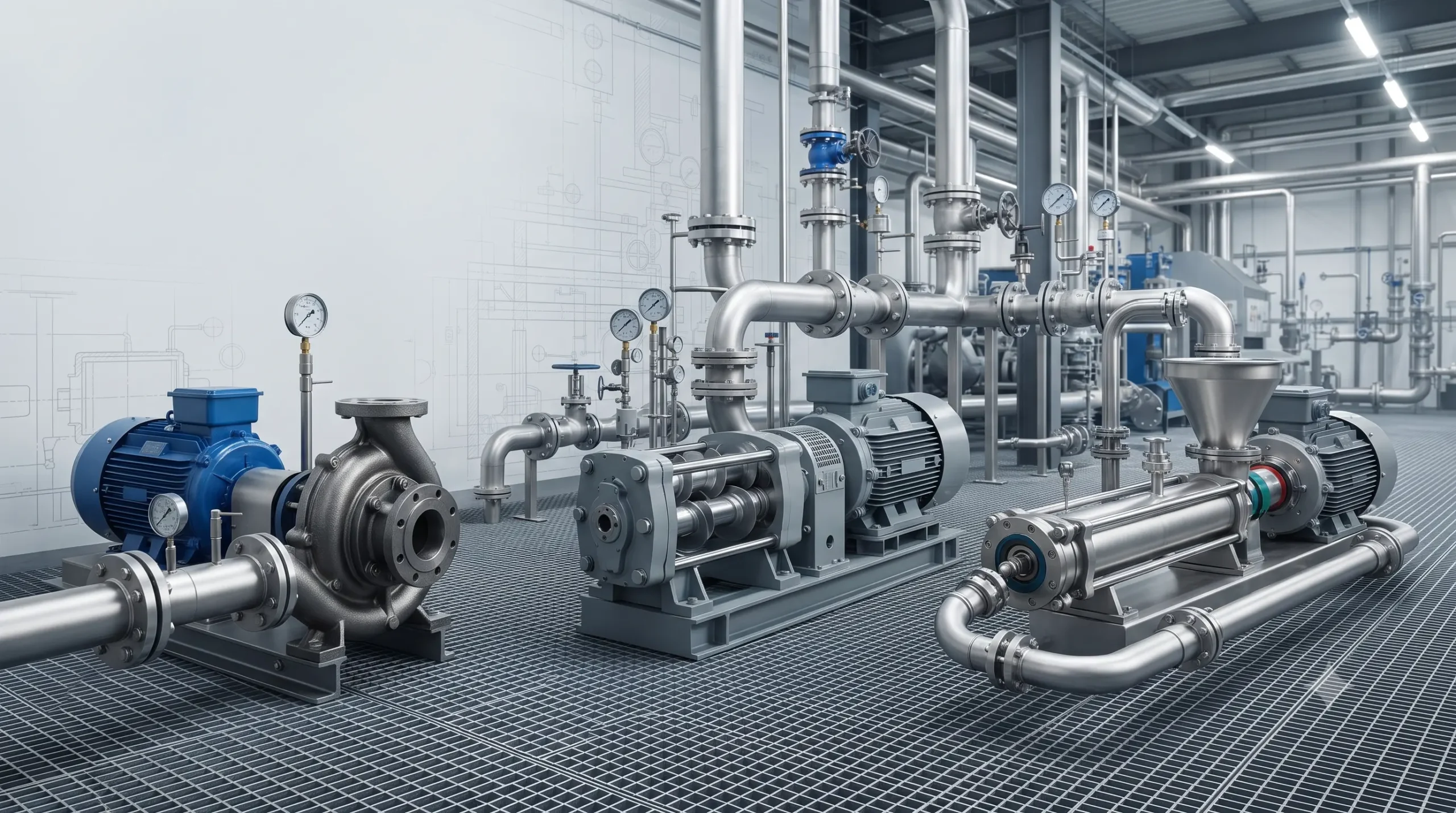
Choosing between a centrifugal pump vs screw pump is not simply a matter of comparing pump prices, motor ratings or catalogue specifications. The better question is: What type of fluid are you pumping, and what does your process actually require? Centrifugal pumps and screw pumps work on fundamentally different principles, which means each has situations where it performs exceptionally well and others where it may be the wrong choice. A centrifugal pump is generally a strong option for high-flow, low-viscosity liquids such as water and many clean process fluids, while a screw pump is a positive-displacement technology that can be better suited to viscous, shear-sensitive, solids-containing or difficult-to-handle fluids.
For engineers, maintenance teams, plant managers and purchasing professionals, understanding this difference before selecting equipment can prevent expensive operating problems later. A pump that looks economical on the quotation may consume more power, struggle with viscosity, experience excessive wear or fail to deliver the required flow once connected to the actual system. On the other hand, specifying a sophisticated positive-displacement pump for a simple water-transfer application may add unnecessary capital and maintenance costs. This guide from Vartak Pumps and Project Consultants explains the practical differences between centrifugal pumps, screw pumps and progressive cavity pumps, helping you make a more informed pump-selection decision.
For centrifugal pumping applications, Vartak Pumps and Project Consultants supplies Wilo Mather & Platt pumps, covering a range of pumping requirements across water management, building services and industrial applications. The manufacturer’s current Indian portfolio can be explored through the official Wilo India website
Understanding the centrifugal pump vs screw pump difference before purchasing equipment can help reduce selection errors and improve long-term pump reliability.
What Is a Centrifugal Pump?
A centrifugal pump is a dynamic pump that uses a rotating impeller to transfer energy to a liquid. Liquid enters the impeller near its centre, gains velocity as the impeller rotates and then moves toward the outer diameter. The pump casing or diffuser converts part of this velocity into pressure, allowing the liquid to travel through the discharge piping and overcome system resistance.
This operating principle makes centrifugal pumps particularly effective for low-viscosity liquids and relatively high-flow applications. Water supply, HVAC circulation, cooling-water systems, irrigation, general industrial utilities and many process-water applications are common examples. Because centrifugal pumps are available in numerous configurations, they can also be engineered for different pressures, temperatures, materials and installation arrangements.
The operating principle is the first major point to consider when evaluating a centrifugal pump vs screw pump for an industrial application.
The important thing is that centrifugal pumps do not simply deliver a fixed volume every revolution in the way a positive-displacement pump does. Their actual flow depends on the relationship between the pump curve and the system curve. As discharge pressure or system resistance changes, the operating flow changes as well. That characteristic is one of the fundamental differences to understand when comparing a centrifugal pump vs screw pump.
When making a centrifugal pump vs screw pump comparison, the fluid characteristics should be considered alongside the required flow and pressure.
How Does a Centrifugal Pump Work?
The basic process starts when the pump receives liquid at its suction connection. The rotating impeller accelerates the liquid and converts mechanical energy from the motor into hydraulic energy. The casing then guides the liquid toward the discharge while converting velocity into useful pressure.
This makes the centrifugal pump particularly attractive where a plant needs continuous and relatively high-volume liquid flow. It is also a mature technology with a wide range of manufacturers, configurations and service options.
However, the fluid itself matters enormously. As viscosity increases, the hydraulic performance of a conventional centrifugal pump can deteriorate because the thicker liquid does not respond to the impeller in the same way as water. This is one reason why engineers often start considering positive-displacement technologies when the process involves heavy oils, polymers, sludges, pastes or other high-viscosity products.
This operating behaviour is an important factor in any centrifugal pump vs screw pump selection.
What Is a Screw Pump?
A screw pump is a rotary positive-displacement pump. Instead of using an impeller to accelerate liquid, it uses one or more rotating screws to capture and transport defined volumes of fluid from the suction side toward the discharge.
Different screw-pump designs exist, including single-screw or progressive cavity pumps, twin-screw pumps and triple-screw pumps. They are not interchangeable; their construction and ideal applications differ. A progressive cavity pump, for example, uses a helical rotor rotating eccentrically inside an elastomeric stator to create a series of sealed cavities that move the fluid progressively toward the discharge.
The positive-displacement principle is one of the main reasons the centrifugal pump vs screw pump decision changes when viscosity or solids become significant.
This positive-displacement principle gives screw pumps characteristics that can be highly valuable for difficult fluids. They can provide relatively steady flow, handle higher-viscosity media and, depending on the specific screw-pump design, manage solids, entrained gas or shear-sensitive products more effectively than a conventional centrifugal pump.
When comparing a centrifugal pump vs screw pump, the positive-displacement principle of the screw pump becomes particularly important for viscous and difficult-to-handle fluids.
That does not mean a screw pump is automatically better. If your plant is simply transferring large quantities of clean water, a centrifugal pump may be the more practical and economical solution.
Centrifugal Pump vs Screw Pump: The Main Difference
The most important difference is how the two pumps move fluid.
A centrifugal pump transfers energy to the liquid through a rotating impeller. A screw pump physically traps and moves fluid through cavities created by its rotating screw elements. This difference influences how the pumps behave when viscosity, pressure, solids content, gas entrainment and flow requirements change.
A detailed centrifugal pump vs screw pump comparison should therefore consider not only the pump construction but also the actual process conditions.
| Feature | Centrifugal Pump | Screw Pump |
|---|---|---|
| Pump type | Dynamic pump | Positive-displacement pump |
| Main pumping element | Impeller | Screw/rotor elements |
| Best suited to | Low-viscosity liquids | Medium/high-viscosity and difficult fluids |
| Typical flow characteristic | Changes with system pressure | More predictable per revolution |
| High-flow water service | Excellent | Often unnecessary |
| High-viscosity service | Application dependent | Strong candidate |
| Solids handling | Depends strongly on design | Depends on screw type |
| Shear-sensitive products | Application dependent | Often suitable with appropriate design |
| Flow pulsation | Generally smooth | Generally smooth/low pulsation |
| Typical applications | Water, HVAC, utilities, process liquids | Oil, sludge, polymers, viscous chemicals and specialized process fluids |
The centrifugal pump vs screw pump comparison ultimately comes down to the relationship between the pump’s operating principle and the characteristics of the fluid being handled.
The exact performance boundary cannot be reduced to one viscosity number because pump design, fluid temperature, specific gravity, solids concentration and required duty all matter. Current engineering references consistently emphasize viscosity and fluid characteristics as major factors when deciding between centrifugal and positive-displacement technologies.
Centrifugal Pump vs Screw Pump for High-Viscosity Fluids
This is one of the clearest areas where pump selection can change dramatically.
Imagine trying to move water through a pipe compared with trying to move thick molasses. The same pump may behave very differently because viscosity changes the resistance to flow and affects the way the pump transfers energy to the fluid. Centrifugal pumps are generally most comfortable with relatively thin liquids, while screw and progressive cavity pumps are often selected when viscosity becomes a major process consideration.
A screw pump captures the fluid and physically transports it. This makes positive-displacement technology attractive for applications involving heavy oils, polymers, sludge, pastes and other viscous materials.
This is one of the most important considerations when making a centrifugal pump vs screw pump selection for oil, polymers, sludge or other viscous media.
However, engineers should not simply say “the fluid is thick, so use a screw pump.” The actual viscosity at pumping temperature is important. Heating a fluid can dramatically reduce viscosity, potentially changing the appropriate pump selection. Suction-piping design, available NPSH, required flow and pressure also need to be considered.
What Is a Progressive Cavity Pump?
A progressive cavity pump, also known as a progressing cavity pump, eccentric screw pump or single-screw pump, is a rotary positive-displacement pump. Its principal components are a helical rotor and a specially shaped stator. As the rotor rotates eccentrically inside the stator, sealed cavities form and progress from the suction side to the discharge side, carrying the pumped medium with them.
For applications involving viscous, abrasive, fibrous or solids-containing fluids, Vartak Pumps and Project Consultants also offers progressive cavity and screw pump solutions by Ingersoll Rand. Explore our Progressive Cavity / Screw Pumps by Ingersoll Rand range for available pump configurations and application details.
The design is particularly useful when a process involves viscous, abrasive, solids-containing or shear-sensitive fluids. The fluid moves through the pump in a controlled manner rather than being accelerated to high velocity by an impeller.
These pump technologies form part of Ingersoll Rand’s broader flow-creation and industrial product portfolio. Ingersoll Rand identifies progressive cavity pumps among its liquid-handling technologies and applications. Ingersoll Rand – Water & Wastewater Solutions
Progressive cavity pumps are used in applications such as wastewater sludge, thickened sludge, polymers, viscous chemicals, food products, pulp and paper materials and other challenging media. Their ability to provide smooth, controlled flow is another reason they are considered for metering and dosing duties.
The Hydro Prokav range covers progressive cavity pumping applications involving highly viscous fluids, slurries and challenging process media. Vartak Pumps and Project Consultants can support customers in evaluating the appropriate pump configuration for their application.
Progressive Cavity Pump vs Centrifugal Pump
The distinction becomes clearer when you compare the pumping mechanism.
A centrifugal pump relies on velocity and pressure generated by an impeller. A progressive cavity pump relies on cavities that physically carry the fluid through the pump. Because of this, the progressive cavity design can be particularly useful when viscosity or solids make conventional centrifugal operation difficult.
The same considerations become important when extending the centrifugal pump vs screw pump comparison to progressive cavity pump applications.
| Parameter | Progressive Cavity Pump | Centrifugal Pump |
|---|---|---|
| Pump principle | Positive displacement | Dynamic |
| Viscous fluids | Excellent candidate | Performance may decline |
| Sludge | Excellent candidate | Application dependent |
| Solids/fibres | Can handle depending on design | Can cause wear or blockage |
| Shear sensitivity | Generally low-shear | Depends on pump and operating conditions |
| Flow | Predictable with speed | Depends on pump/system curve |
| Metering | Suitable | Generally less suited |
| Clean water, high flow | Usually unnecessary | Excellent |
| Maintenance consideration | Rotor/stator wear is important | Seals, bearings and impeller wear |
The exact suitability always depends on the specific pump construction and fluid. For example, a progressive cavity pump’s elastomeric stator must be compatible with the chemical, temperature and operating conditions.
Progressive Cavity Pump vs Screw Pump: Are They the Same?
This is an important terminology question because progressive cavity pump and screw pump are sometimes used interchangeably, but “screw pump” is a broader category.
A progressive cavity pump is a type of single-screw or eccentric-screw positive-displacement pump. Other screw-pump designs include twin-screw and triple-screw configurations, which have different internal geometries and application ranges. Current pump-selection references distinguish single-screw progressive cavity pumps from twin- and triple-screw pumps because their handling capabilities and operating characteristics differ.
Therefore, when a customer asks for a “screw pump,” the supplier should clarify which type of screw pump is required. The fluid, viscosity, solids, gas content, pressure, flow and temperature will help determine the appropriate configuration.
When Should You Choose a Centrifugal Pump?
A centrifugal pump is generally a strong candidate when the application involves clean or relatively clean, low-viscosity liquid and substantial flow.
Typical examples include:
- Raw-water transfer
- Cooling-water circulation
- HVAC systems
- Water supply
- Irrigation
- General industrial utilities
- Fire-water systems
- Clean process liquids
- Water-treatment applications
The major attraction is simplicity and scalability. Centrifugal technology is available across a very broad range of flow rates and pressures, and there is extensive industrial experience with installation, maintenance and operation.
If your application involves a large volume of water at moderate pressure, there is often little reason to introduce the additional complexity of a positive-displacement screw pump.
When Should You Choose a Screw Pump?
A screw pump becomes particularly interesting when the fluid is viscous, difficult to handle, shear-sensitive, solids-laden or requires a controlled and relatively steady flow.
Typical applications can include:
- Heavy oils
- Lubricating oils
- Polymers
- Sludge
- Wastewater solids
- Food products
- Chemical fluids
- Resins
- Adhesives
- Abrasive slurries, depending on pump design
However, “screw pump” should not be treated as one universal category. A twin-screw pump may be selected for applications involving multiphase flow, while a triple-screw pump is commonly associated with clean, lubricating fluids. A progressive cavity pump can be particularly useful for sludge, viscous chemicals and solids-containing media. (ChangYu Pump)
Screw Pump vs Progressive Cavity Pump
The terms screw pump and progressive cavity pump can create confusion during procurement. A progressive cavity pump is one specific type of screw pump, but not every screw pump is a progressive cavity pump.
A progressive cavity pump uses a single helical rotor and elastomeric stator. The rotor moves eccentrically and creates progressive cavities. Twin- and triple-screw pumps use different arrangements and are typically selected for different fluid and process conditions.
| Pump Type | Basic Design | Typical Strength |
|---|---|---|
| Progressive cavity pump | Rotor + elastomeric stator | Viscous, solids-containing and shear-sensitive fluids |
| Twin-screw pump | Two screws | Multiphase and demanding process transfer |
| Triple-screw pump | One drive screw + two idler screws | Clean lubricating fluids and high-pressure duties |
| Centrifugal pump | Rotating impeller | High-flow, low-viscosity liquids |
So if an enquiry simply says “screw pump required,” the next step should be to obtain the process details before recommending a model.
How Viscosity Affects Pump Selection
Viscosity is one of the most important variables in this comparison.
A low-viscosity fluid such as water flows relatively easily. A high-viscosity fluid resists movement and can significantly change the hydraulic behaviour of a pump. This is why the same pump cannot be evaluated identically for water and heavy oil.
For high-viscosity applications, the centrifugal pump vs screw pump decision should be based on the fluid’s viscosity at its actual operating temperature.
For centrifugal pumps, increasing viscosity can reduce flow, head and efficiency and increase power requirements. Positive-displacement technologies can be more appropriate as viscosity rises, but their own mechanical and energy characteristics still need to be evaluated.
The correct approach is therefore to specify dynamic or kinematic viscosity at the actual pumping temperature, rather than simply describing a fluid as “thick.”
Solids Handling: Which Pump Is Better?
The presence of solids can completely change pump selection.
A conventional centrifugal pump may struggle when fibrous materials, abrasive particles or large solids enter the hydraulic passage. Special centrifugal slurry pumps can certainly be engineered for abrasive service, but a standard clean-water centrifugal pump should not automatically be expected to handle difficult solids.
Progressive cavity pumps are frequently considered for sludge, wastewater and solids-containing fluids because their cavity-based pumping action can accommodate challenging media when the pump is correctly specified.
The size, concentration, hardness and shape of the solids are all important. A supplier should know these details before selecting the pump.
Shear-Sensitive Fluids
Some products are damaged when exposed to excessive shear. This can matter in food processing, polymers, emulsions, cosmetics and other process industries.
The high-speed impeller action of a centrifugal pump can produce more shear than a carefully selected positive-displacement pump in certain applications. Progressive cavity and other low-shear pump designs can therefore be considered when preserving product characteristics is important. (Pump Power)
This does not mean that every screw pump is automatically low shear. Pump speed, fluid properties, clearances and operating conditions all influence the actual process. The application should therefore be evaluated by a pump specialist.
Flow and Pressure Comparison
Another major difference is how the pumps respond to pressure.
A centrifugal pump operates according to its pump curve. If system resistance increases, the operating flow generally changes. This makes proper pump-curve and system-curve analysis essential.
A positive-displacement screw pump, by contrast, moves a defined volume per revolution, although actual flow is affected by slip, pressure differential, viscosity and pump condition. This characteristic makes screw pumps attractive when a relatively predictable flow is required across changing discharge pressures.
However, a positive-displacement pump should never be operated against a closed discharge without suitable pressure protection. The pressure can rise rapidly if there is no relief path.
Centrifugal Pump vs Screw Pump: Maintenance
Maintenance requirements are different because the machines have different internal designs.
Centrifugal pumps commonly require attention to mechanical seals, bearings, couplings, impellers and wear components. Correct alignment and operating near the intended hydraulic region can contribute to reliable service.
Progressive cavity pumps require particular attention to the rotor, stator, seals and drive components. The stator is often an elastomeric component, making material compatibility and temperature especially important. Running a progressive cavity pump dry can cause severe damage because the rotor-stator interface depends on the pumped medium for lubrication and cooling. (Graco)
This is an excellent example of why pump selection should consider maintenance practices as well as hydraulic performance.
Centrifugal Pump vs Screw Pump: Energy Efficiency
There is no universal winner when it comes to energy efficiency.
For clean, low-viscosity liquids and high-flow applications, centrifugal pumps can be extremely efficient and economical. Their widespread use in water systems is not accidental; the technology is well suited to these operating conditions.
When fluid viscosity increases, however, the economics can change. A centrifugal pump may require considerably more power or may need design modifications to maintain acceptable performance. Positive-displacement pumps can become more attractive for these duties.
The most useful comparison is therefore not “Which pump has the highest efficiency?” but “Which pump has the lowest total energy cost at my actual operating point?”
How to Choose Between Centrifugal, Screw and Progressive Cavity Pumps
Before requesting quotations from pump suppliers, prepare a proper pump-duty sheet.
A proper centrifugal pump vs screw pump evaluation should begin with process data rather than the purchase price of the equipment.
At minimum, provide:
- Required flow rate
- Discharge pressure or total head
- Fluid name
- Operating temperature
- Viscosity at operating temperature
- Specific gravity
- Solids concentration and particle size
- Gas entrainment, if applicable
- Required suction conditions
- Operating hours
- Material compatibility requirements
- Required pump configuration
- Motor and electrical details
- Duty/standby philosophy
This information allows the supplier to make a technically meaningful recommendation.
A structured centrifugal pump vs screw pump evaluation helps engineers avoid selecting equipment based solely on catalogue flow or motor power.
Quick Pump Selection Guide
| Application Requirement | Likely Starting Point |
|---|---|
| Clean water + high flow | Centrifugal pump |
| HVAC circulation | Centrifugal/inline centrifugal pump |
| General industrial water | Centrifugal pump |
| High-viscosity oil | Screw pump |
| Sludge | Progressive cavity pump |
| Polymer solution | Progressive cavity or suitable PD pump |
| Shear-sensitive product | Progressive cavity/other low-shear PD pump |
| Clean lubricating oil | Screw pump |
| Large-volume clean liquid | Centrifugal pump |
| Solids-containing process fluid | Progressive cavity or suitable solids-handling pump |
This table is a starting point, not a substitute for engineering selection. Even within one application, the final pump type can change according to pressure, temperature, viscosity and solids.
Common Pump Selection Mistakes
One of the most common mistakes is selecting a pump based solely on flow rate. A pump might deliver the required flow in a catalogue, but that does not mean it will deliver it at the required pressure and actual system conditions.
Another mistake is ignoring viscosity. Quoting a pump based on water performance when the actual fluid is a heavy oil or polymer can result in disappointing performance.
A common mistake in a centrifugal pump vs screw pump comparison is to focus on catalogue flow rates without checking the actual operating viscosity and system pressure.
A third mistake is overlooking solids. The phrase “sludge” does not provide enough information. Engineers need to know solids concentration, particle size, abrasiveness, fibrous content and viscosity.
Finally, some buyers focus heavily on initial purchase price while ignoring energy consumption and maintenance. A pump that is cheaper to purchase can become more expensive over several years if it consumes more power or requires frequent component replacement.
Why Work With Vartak Pumps and Project Consultants?
Vartak Pumps and Project Consultants has built its business around steady growth, technical understanding and long-term industry relationships. For customers evaluating different pumping technologies, this approach is important because pump selection is rarely about the pump alone.
The right solution depends on understanding the fluid, process and system. A water-transfer application may point toward a centrifugal pump, while a viscous chemical may require a screw pump or progressive cavity pump. A wastewater application containing solids can require an entirely different pump configuration.
Vartak Pumps and Project Consultants can help customers evaluate their requirements and identify an appropriate pumping technology rather than treating every enquiry as a standard pump sale. This application-oriented approach is particularly useful for industries where reliability, process continuity and lifecycle cost are important.
For customers comparing a centrifugal pump vs screw pump, the best starting point is to provide the actual process data. Once the duty is understood, the pump technology can be selected on engineering merit.
Ultimately, the centrifugal pump vs screw pump decision should be based on fluid properties, flow, pressure, temperature, solids, operating hours and lifecycle requirements.
Centrifugal Pump vs Screw Pump: Final Decision
So, centrifugal pump vs screw pump – which one should you choose?
If you are pumping clean, low-viscosity liquid at relatively high flow, a centrifugal pump is often the logical starting point. It is a proven technology with broad industrial use and can provide an economical solution for water, cooling, HVAC and many utility applications.
If the fluid is highly viscous, contains solids, is shear-sensitive or requires relatively predictable positive-displacement flow, a screw pump may be a better starting point. Within the screw-pump family, the application may point toward a progressive cavity pump, twin-screw pump or triple-screw pump, depending on the fluid and process.
Before finalizing a centrifugal pump vs screw pump selection, confirm the flow rate, pressure, temperature, viscosity, solids content and suction conditions with the pump supplier.
The important lesson is simple: do not choose the pump first and then try to make the process fit it. Start with the process, understand the fluid and operating conditions, and then choose the pump technology.
That is the approach that can lead to better reliability, lower operating costs and fewer surprises after commissioning.
FAQs About Centrifugal Pumps, Screw Pumps and Progressive Cavity Pumps
1. What is the main difference between a centrifugal pump and a screw pump?
A centrifugal pump is a dynamic pump that uses an impeller to transfer energy to the liquid, while a screw pump is a positive-displacement pump that uses rotating screw elements to transport defined volumes of fluid. Centrifugal pumps are commonly used for high-flow, low-viscosity liquids, while screw pumps are often considered for viscous or difficult-to-handle fluids.
2. Is a progressive cavity pump a screw pump?
Yes. A progressive cavity pump is a type of single-screw or eccentric-screw positive-displacement pump. It uses a helical rotor rotating inside an elastomeric stator to create progressive cavities that transport the fluid.
3. Which pump is better for high-viscosity fluids?
A screw or progressive cavity pump is often a stronger candidate for high-viscosity fluids than a conventional centrifugal pump. However, the actual selection depends on viscosity at pumping temperature, required flow, pressure, solids and other process conditions.
4. Which pump is suitable for sludge?
Progressive cavity pumps are commonly considered for sludge and other solids-containing fluids because their positive-displacement pumping mechanism can provide smooth flow and handle difficult media when correctly specified.
5. Can a screw pump replace a centrifugal pump?
Not always. A screw pump can replace a centrifugal pump in some applications, particularly where viscosity, solids, shear or controlled flow make positive-displacement technology more suitable. For high-volume clean-water applications, however, a centrifugal pump may remain the more practical choice.