 WILO Mather Platt: No.1 channel partner in India consecutively from year 2015-2025
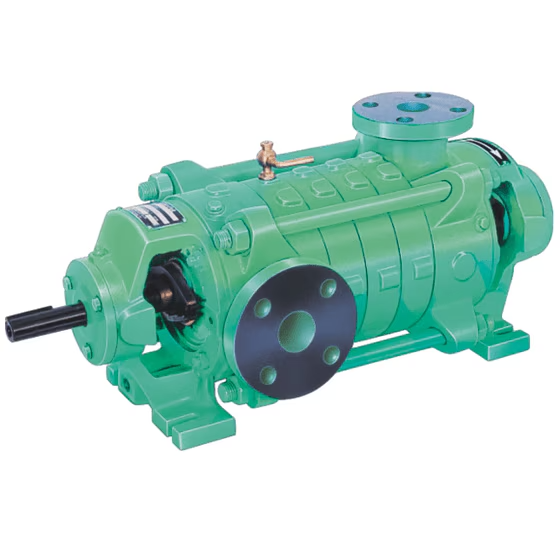
In industries where high-pressure fluid transfer is essential, selecting the right pump can significantly improve efficiency, reliability, and operational safety. One of the most dependable solutions for such demanding applications is the Ring Section Pump.
These pumps are widely used in power plants, chemical processing industries, refineries, water treatment facilities, and boiler feed systems due to their ability to handle high-pressure liquids with exceptional efficiency.
At Vartak Pumps and Project Consultants, we help industries select, supply, and maintain high-performance pumping systems that deliver reliable performance even under the most challenging operating conditions.
In this guide, we’ll explain everything you need to know about Ring Section Pumps, including their working principle, construction, advantages, applications, maintenance tips, and selection criteria.
What is a Ring Section Pump?
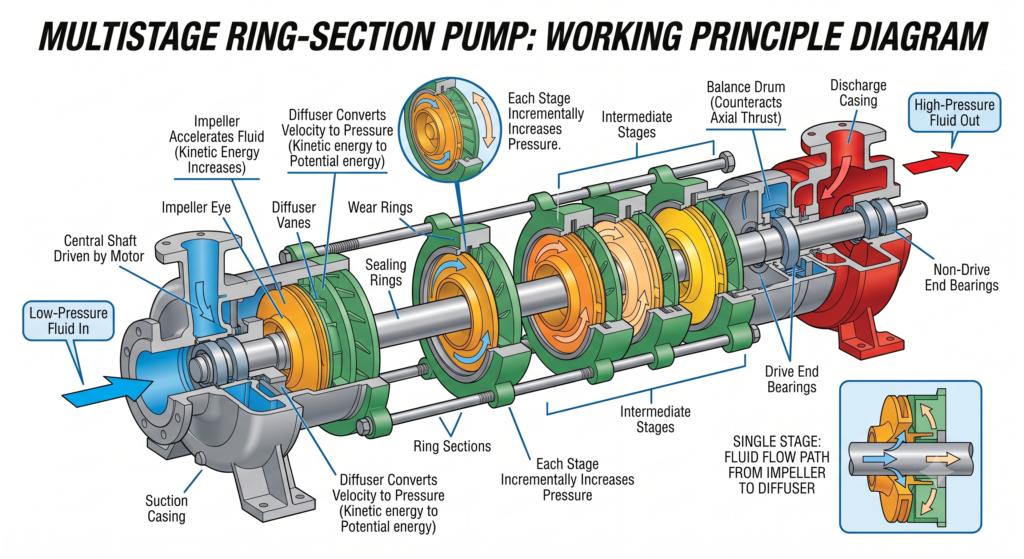
A Ring Section Pump is a horizontal multistage centrifugal pump designed to generate high discharge pressure by passing liquid through multiple impellers connected in series.
Each impeller increases the fluid pressure before transferring it to the next stage. As a result, the final discharge pressure becomes significantly higher than that of a single-stage centrifugal pump.
This operating principle is consistent with industry-recognised guidance for multistage centrifugal pumps published by the Hydraulic Institute.
This modular construction makes Ring Section Pumps an excellent choice for applications requiring continuous high-pressure pumping over long distances or at elevated heads.
How Does a Ring Section Pump Work?
The operation of a Ring Section Pump is straightforward yet highly efficient.
- Liquid enters through the suction inlet.
- The first impeller increases the fluid velocity.
- A diffuser converts velocity into pressure.
- The fluid passes through successive impellers.
- Each stage further increases the pressure.
- The liquid exits through the discharge nozzle at the required pressure.
Because pressure is built gradually across multiple stages, these pumps deliver high efficiency while minimizing mechanical stress.
Main Components of a Ring Section Pump
A Ring Section Pump typically consists of:
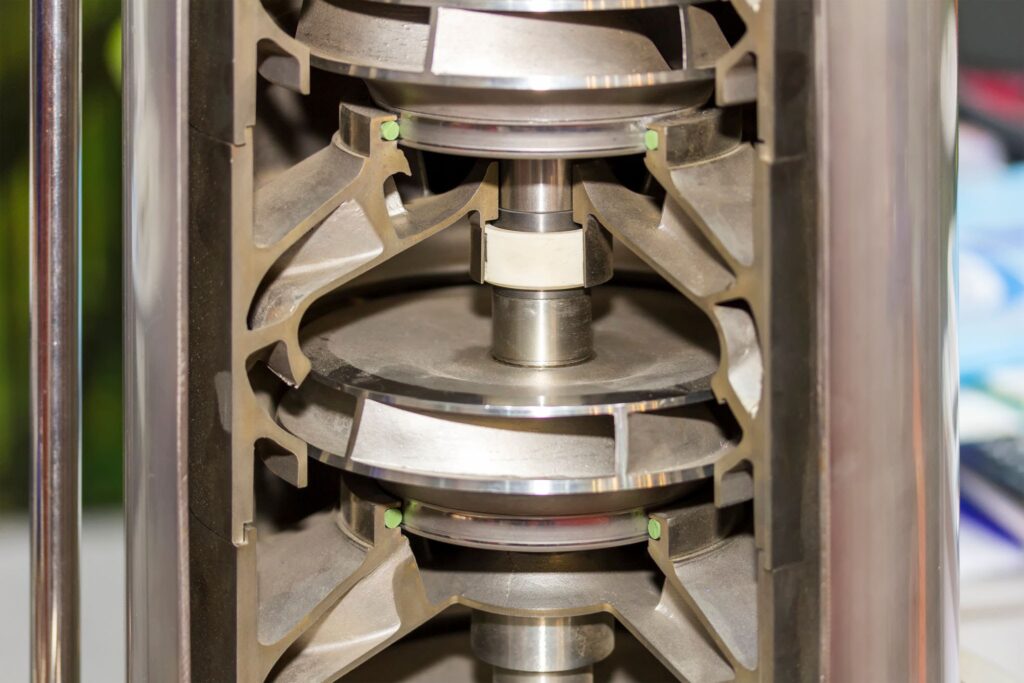
- Suction Casing
- Multiple Impellers
- Diffuser Chambers
- Stage Casings
- Pump Shaft
- Bearings
- Mechanical Seal or Gland Packing
- Coupling
- Electric Motor
- Discharge Casing
Each stage is assembled using ring-shaped sections, Industrial Pump Spare Parts which is why these pumps are known as Ring Section Pumps.
Key Features of Ring Section Pumps
- High-pressure liquid handling
- Multistage centrifugal design
- Excellent hydraulic efficiency
- Compact construction
- Easy maintenance
- Long service life
- Low vibration levels
- Reliable continuous operation
- Suitable for clean liquids
- Energy-efficient performance
Advantages of Ring Section Pumps
1. High Pressure Generation
Multiple impellers allow the pump to generate extremely high discharge pressure without increasing impeller diameter.
2. Excellent Energy Efficiency
Pressure is built gradually through each stage, reducing energy losses.
3. Compact Design
Instead of installing multiple pumps, a single Ring Section Pump can achieve the required pressure.
4. Easy Maintenance
Individual sections can often be serviced without replacing the complete pump.
5. Reliable Operation
These pumps are engineered for continuous industrial duty with minimal downtime.
6. Long Service Life
Proper installation and maintenance can provide years of dependable operation.
Industrial Applications of Ring Section Pumps
Ring Section Pumps are commonly used in:
Power Plants
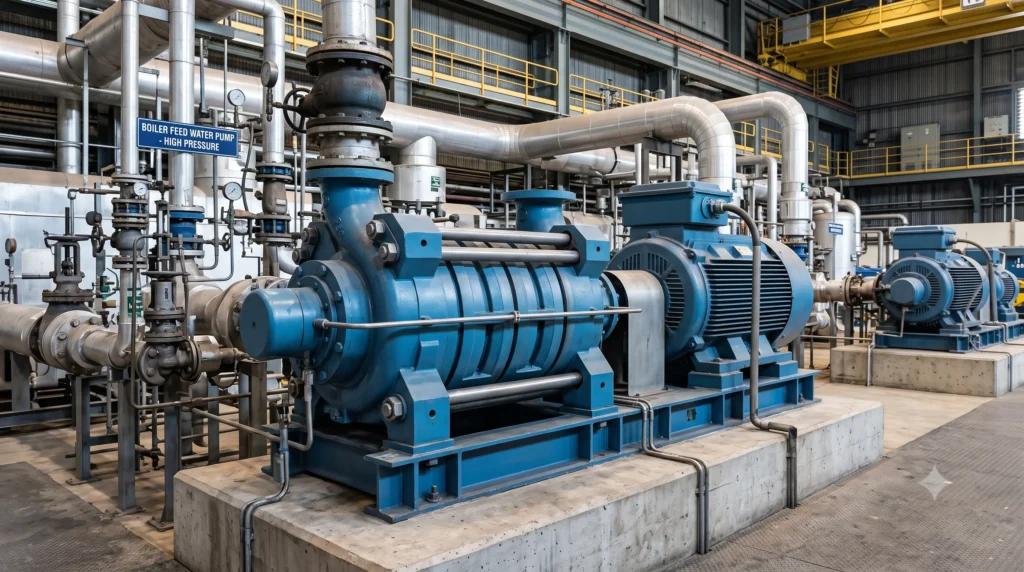
- Boiler Feed Water
- Condensate Transfer
- High-pressure Water Supply
Chemical Industries
- Process Water
- Chemical Transfer
- Solvent Circulation
Oil & Gas
- Water Injection
- Utility Services
- Cooling Systems
Water Treatment Plants
- High-pressure Filtration
- Reverse Osmosis Systems
- Water Distribution
Manufacturing Industries
- Cooling Water Systems
- Pressure Boosting
- Process Fluid Handling
Mining
- Mine Dewatering
- Slurry Transfer (with suitable materials)
- Water Supply
Ring Section Pump vs Single Stage Centrifugal Pump
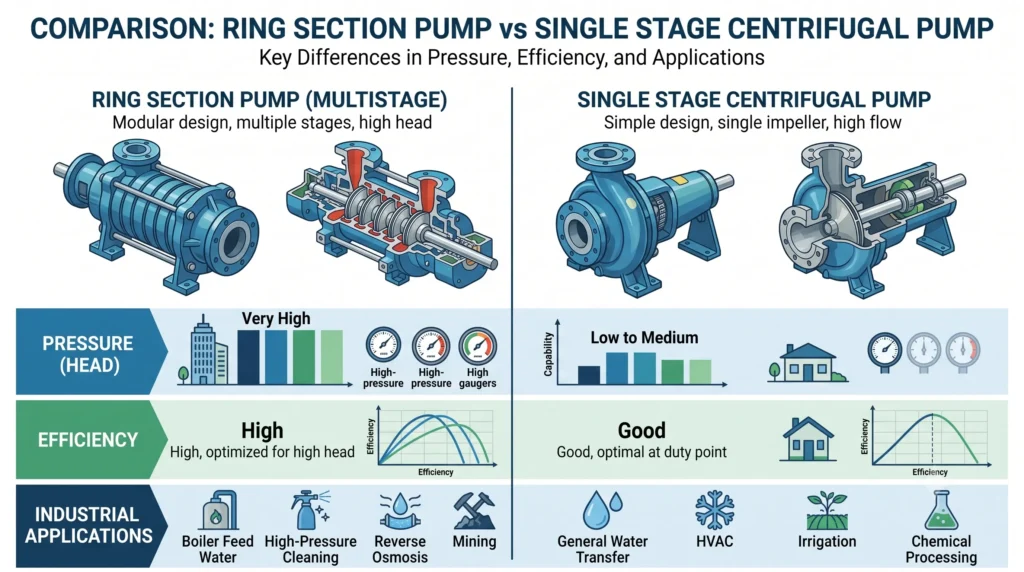
| Feature | Ring Section Pump | Single Stage Pump |
|---|---|---|
| Number of Impellers | Multiple | One |
| Pressure | Very High | Moderate |
| Head | High | Low to Medium |
| Efficiency | High | Moderate |
| Industrial Applications | Heavy Duty | General Purpose |
| Initial Cost | Higher | Lower |
| Maintenance | Moderate | Easy |
Ring Section Pump vs Multistage Pump
Many people ask whether Ring Section Pumps and Multistage Pumps are different.
The answer is simple:
A Ring Section Pump is a type of Multistage Centrifugal Pump.
Its distinctive feature is the modular ring-section construction, which makes maintenance easier and allows higher pressure capabilities.
Common Applications by Industry
| Industry | Typical Use |
|---|---|
| Power Generation | Boiler Feed Pumps |
| Fertilizer Plants | Process Water |
| Refineries | High-pressure Transfer |
| Chemical Plants | Process Fluids |
| Water Supply | Pressure Boosting |
| Steel Plants | Cooling Systems |
| Paper Industry | Process Water |
| Textile Industry | Utility Water |
How to Select the Right Ring Section Pump
When choosing a Ring Section Pump, consider:
Flow Rate (m³/hr)
Determine the required liquid volume.
Total Dynamic Head (TDH)
Calculate the total pressure requirement.
Liquid Type
Understand viscosity, temperature, and chemical compatibility.
Operating Temperature
Select suitable materials and seals.
Pump Material
Common options include:
- Cast Iron
- Stainless Steel
- Duplex Stainless Steel
- Bronze
- Alloy Steel
Selecting the appropriate material depends on the operating pressure, fluid characteristics, corrosion resistance requirements, and applicable engineering standards. Material selection should also align with recognised design practices published by ASME.
Motor Rating
Choose an energy-efficient motor based on operating conditions.
Maintenance Tips
Proper maintenance improves pump reliability.
Establishing a preventive maintenance schedule based on recognised quality management practices can improve equipment reliability and reduce unexpected downtime. Many industrial facilities follow maintenance systems aligned with ISO standards.
Recommended Practices
- Check bearing lubrication regularly.
- Monitor vibration levels.
- Inspect mechanical seals.
- Verify coupling alignment.
- Replace worn impellers when necessary.
- Monitor discharge pressure.
- Clean suction strainers.
- Avoid dry running.
Common Problems and Solutions
| Problem | Possible Cause | Solution |
|---|---|---|
| Low Pressure | Worn Impeller | Replace Impeller |
| Excessive Vibration | Misalignment | Realign Pump |
| Leakage | Damaged Seal | Replace Seal |
| High Noise | Bearing Failure | Replace Bearings |
| Low Flow | Blocked Suction | Clean Suction Line |
Why Choose Vartak Pumps and Project Consultants?
At Vartak Pumps and Project Consultants, we provide reliable pumping solutions tailored to industrial requirements. Our team assists customers in selecting the right pump based on application, operating conditions, and performance requirements.
We offer:
- Expert pump selection assistance
- Industrial pumping solutions
- Technical consultation
- Spare parts support
- Maintenance guidance
- Project consultancy
- Reliable after-sales service
Our goal is to help industries maximize efficiency while reducing operational costs and downtime.
Frequently Asked Questions (FAQs)
What is a Ring Section Pump?
A Ring Section Pump is a multistage centrifugal pump designed to generate high pressure by passing liquid through multiple impellers connected in series.
Where are Ring Section Pumps used?
They are commonly used in power plants, chemical processing, refineries, water treatment plants, and industrial pressure boosting systems.
What is the advantage of a Ring Section Pump?
Its primary advantage is the ability to deliver high pressure efficiently while maintaining reliable, continuous operation.
Can Ring Section Pumps handle high temperatures?
Yes, depending on the materials of construction and seal arrangement, they can handle elevated temperatures in industrial applications.
How often should a Ring Section Pump be maintained?
Routine inspections should be performed according to the manufacturer’s recommendations, with periodic checks on bearings, seals, alignment, and lubrication to ensure optimal performance.
Final Thoughts
Ring Section Pumps are an excellent solution for industries that require reliable, high-pressure fluid transfer. Their multistage design, robust construction, and efficient performance make them ideal for applications ranging from boiler feed systems to chemical processing and water treatment.
Choosing the right Ring Section Pump depends on your operating conditions, required flow rate, pressure, and fluid characteristics. With proper selection and regular maintenance, these pumps can provide dependable performance for many years.
If you’re looking for expert guidance or industrial pumping solutions, Vartak Pumps and Project Consultants is ready to help you select the right Ring Section Pump for your application.