
 WILO Mather Platt: No.1 channel partner in India consecutively from year 2015-2025
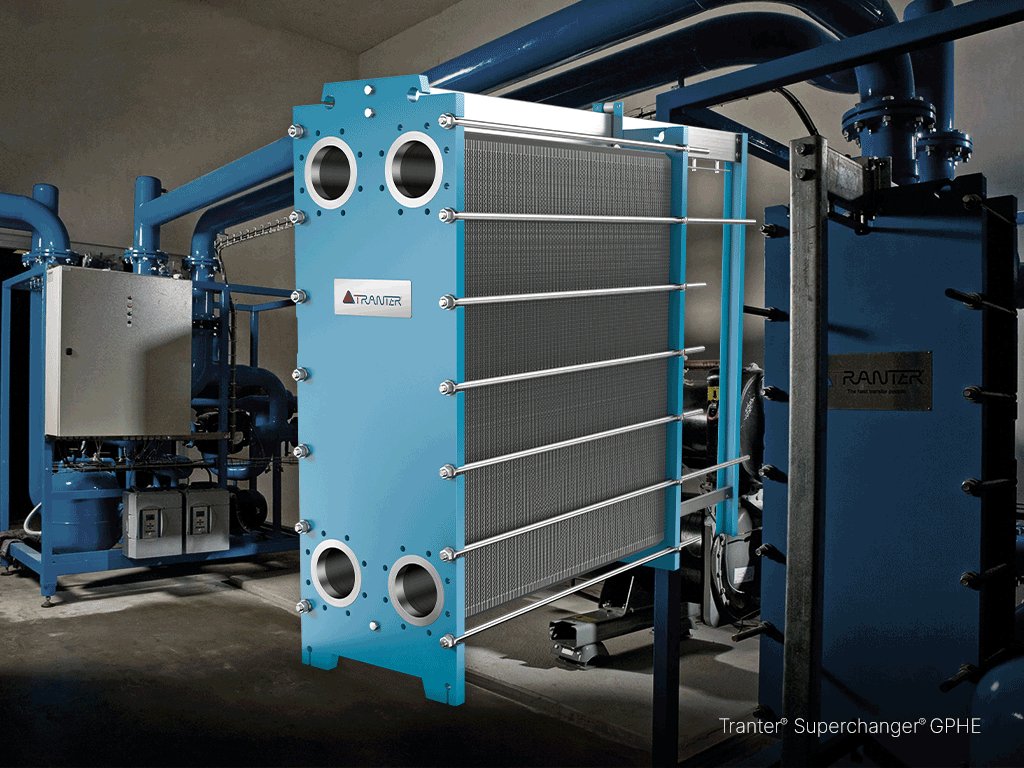
Efficient heat transfer is a critical requirement in today’s industrial processes. Whether it is maintaining process temperatures in chemical manufacturing, recovering waste heat in power plants, cooling products in food processing, or improving energy efficiency in HVAC systems, plate heat exchangers play a vital role in delivering reliable and cost-effective thermal performance.
Compared with many conventional heat transfer systems, plate heat exchangers provide a compact footprint, excellent thermal efficiency, lower energy consumption, and simplified maintenance. Their modular design also allows capacity expansion and servicing with minimal disruption, making them a preferred choice for engineers, plant operators, and project consultants across a wide range of industries.
As an authorized distributor of Tranter, Vartak Pumps and Project Consultants offers advanced plate heat exchangers designed to meet demanding industrial applications. Backed by technical expertise and application support, we help customers select the right heat exchanger solution to maximize performance, reliability, and long-term operational efficiency.
What Are Plate Heat Exchangers?
A plate heat exchanger is a highly efficient heat transfer device that uses a series of specially engineered metal plates to transfer heat between two fluids without allowing them to mix. The corrugated plate design creates turbulent flow, significantly improving heat transfer efficiency while reducing the space required compared with many traditional heat exchanger designs.
Because of their compact construction and high thermal performance, plate heat exchangers are widely used in chemical processing, pharmaceuticals, food and beverage manufacturing, HVAC systems, power generation, marine applications, and water treatment plants.
What Are Plate Heat Exchangers?
A plate heat exchanger is a compact heat transfer system that transfers thermal energy between two fluids through a series of thin, corrugated metal plates. The plate arrangement creates alternating flow channels, allowing hot and cold fluids to pass on opposite sides of each plate while remaining completely separated.
The corrugated pattern increases surface area and promotes turbulence, enabling efficient heat transfer even within a compact unit. As a result, plate heat exchangers often deliver excellent thermal performance while occupying significantly less installation space than many conventional heat exchanger designs.
Depending on the application, plate heat exchangers can be configured with gaskets, welded plate packs, plate & shell construction, or spiral channels to suit different pressure, temperature, and fluid characteristics.
How Do Plate Heat Exchangers Work?
The operating principle of plate heat exchangers is based on indirect heat transfer.
The system consists of multiple metal plates arranged together to form alternating flow passages. One fluid flows through every other channel while the second fluid flows through the adjacent channels in the opposite direction (counter-current flow). Heat passes through the thin metal plates from the hotter fluid to the cooler fluid without the two fluids mixing.
The corrugated plate geometry creates turbulence even at relatively low flow rates. This turbulence increases heat transfer efficiency, minimizes fouling, and improves overall thermal performance.
The principles of thermal design and heat transfer performance used in industrial heat exchangers are extensively researched by organizations such as Heat Transfer Research, Inc. (HTRI), which develops engineering methodologies used throughout the process industries.
Because of this efficient design, plate heat exchangers can achieve high heat transfer rates while reducing energy consumption and installation space.
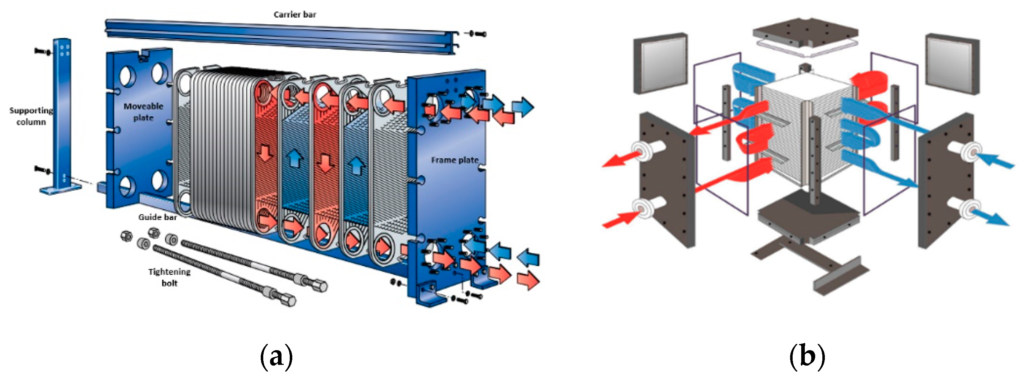
Main Components of Plate Heat Exchangers
Understanding the main components of plate heat exchangers helps engineers and maintenance teams select the most suitable equipment for their applications.
Heat Transfer Plates
The plates are the core of the heat exchanger. Manufactured from corrosion-resistant materials such as stainless steel or titanium (depending on the application), they maximize the heat transfer surface while maintaining structural strength.
Fixed Frame Plate
Provides structural support and forms one end of the plate pack.
Movable Pressure Plate
Allows the plate pack to be opened for inspection, cleaning, maintenance, or future capacity expansion.
Gaskets (for Gasketed Models)
Elastomer gaskets seal each plate and direct the flow of fluids through alternating channels while preventing leakage.
Tightening Bolts
These bolts compress the plate pack to ensure proper sealing and maintain mechanical integrity during operation.
Connection Ports
The inlet and outlet ports distribute hot and cold fluids evenly throughout the plate pack for efficient heat exchange.
Advantages of Plate Heat Exchangers
Modern plate heat exchangers offer several advantages that make them a preferred choice for industrial heat transfer applications.
- Exceptional heat transfer efficiency due to the large effective surface area.
- Compact design that requires less installation space.
- Lower energy consumption through efficient thermal performance.
- Modular construction that allows easy capacity expansion.
- Simple maintenance with accessible plate packs.
- Reduced operating costs over the equipment lifecycle.
- Lower fouling because of the turbulent flow pattern.
- Flexible material options for corrosive and demanding process fluids.
- Suitable for a wide range of industries and operating conditions.
- Reliable performance with proper selection and maintenance.
Whether used in chemical processing, HVAC systems, food production, pharmaceuticals, marine applications, or industrial utilities, plate heat exchangers help improve process efficiency while reducing operating costs.
Types of Tranter Plate Heat Exchangers
Selecting the right plate heat exchangers is essential for achieving optimum thermal performance, long service life, and low operating costs. Different industrial processes demand different heat exchanger designs based on operating pressure, temperature, fluid characteristics, fouling tendency, and maintenance requirements.
As an authorized distributor of Tranter, Vartak Pumps and Project Consultants offers a comprehensive range of plate heat exchangers for industrial applications. Each product is engineered to deliver reliable heat transfer while meeting the specific demands of various industries.
Gasketed Plate Heat Exchangers
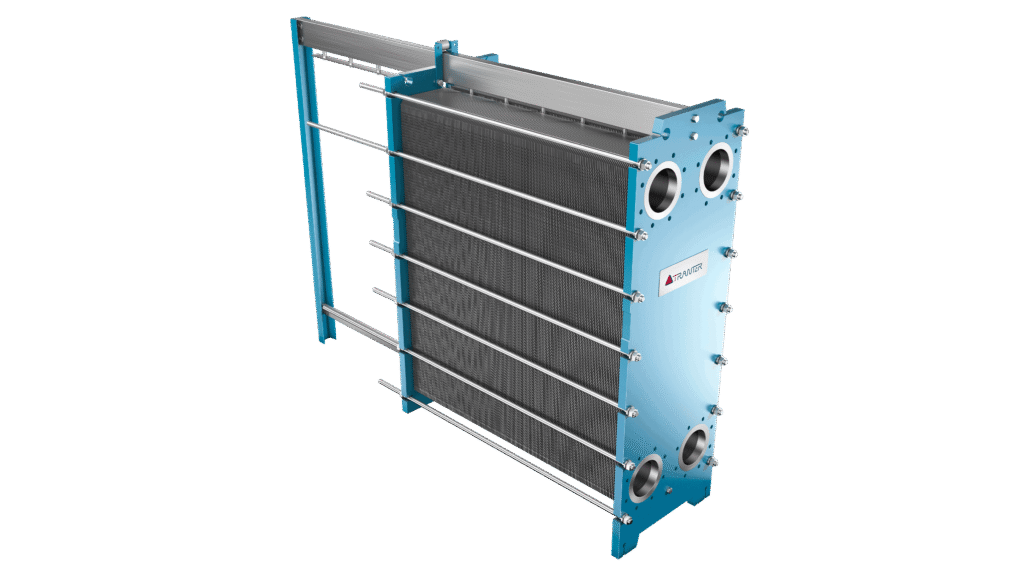
Among the most widely used plate heat exchangers, Gasketed Plate Heat Exchangers provide exceptional flexibility and thermal efficiency. These heat exchangers consist of corrugated metal plates sealed with elastomer gaskets that create separate flow channels for hot and cold fluids.
One of the biggest advantages of gasketed designs is their serviceability. The plate pack can be opened easily for inspection, cleaning, maintenance, or capacity expansion by adding or removing plates. This modular construction makes them an economical choice for industries where operating conditions may change over time.
Key Features
- High heat transfer efficiency
- Modular and expandable design
- Easy inspection and cleaning
- Low maintenance costs
- Compact footprint
- Wide range of plate materials and gasket options
- Suitable for multiple process fluids
Typical Applications
- Chemical Processing
- Pharmaceutical Manufacturing
- Food & Beverage Processing
- Dairy Industry
- HVAC Systems
- District Cooling
- Marine Applications
- Water Treatment Plants
UltraMAX® Welded Plate Heat Exchangers
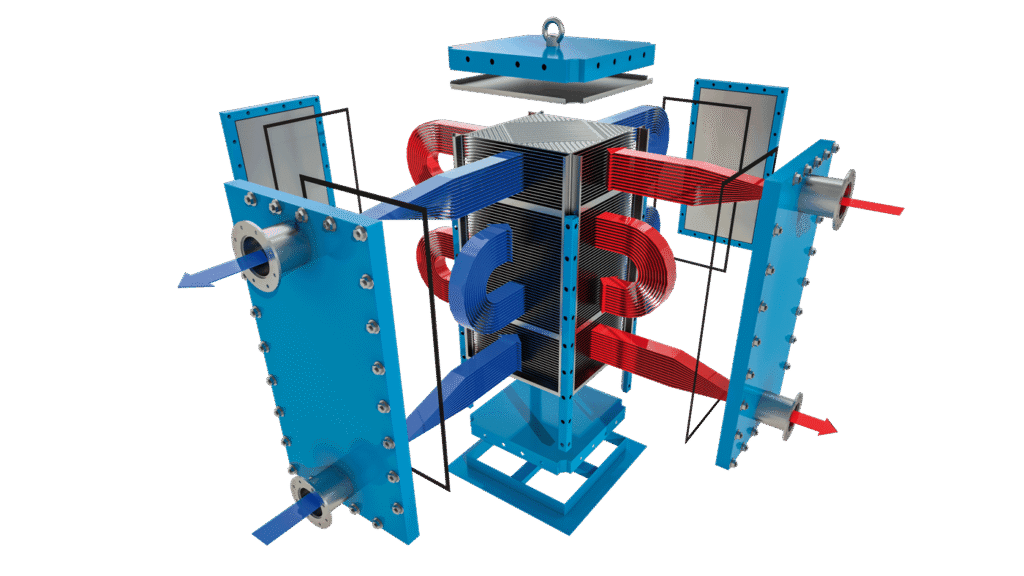
For demanding industrial environments involving high pressures, elevated temperatures, or aggressive process fluids, UltraMAX® Welded Plate Heat Exchangers offer a robust and reliable solution.
Unlike gasketed models, UltraMAX® units feature a welded plate pack that minimizes gasket exposure within the process area. This construction enhances reliability in applications where conventional gasketed equipment may not be suitable.
Despite their compact size, UltraMAX® plate heat exchangers provide excellent thermal performance, helping industries improve energy efficiency while reducing installation space.
Key Features
- Welded plate construction
- Suitable for high-pressure applications
- Designed for elevated operating temperatures
- Compact installation footprint
- High thermal efficiency
- Reduced maintenance requirements
- Reliable performance in demanding process conditions
Typical Applications
- Petrochemical Plants
- Oil & Gas Industry
- Refrigeration Systems
- Industrial Heating
- Chemical Processing
- Energy Recovery Systems
SuperMAX® Plate & Shell Heat Exchangers
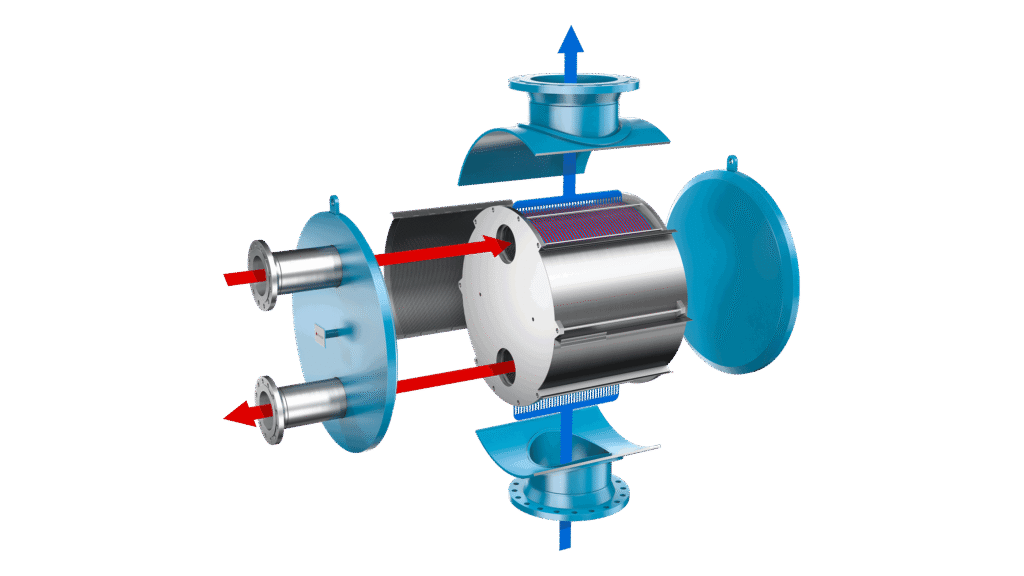
SuperMAX® Plate & Shell Heat Exchangers combine the thermal efficiency of plate technology with the mechanical strength of a shell-and-tube configuration. This hybrid design enables efficient heat transfer while handling higher pressures and temperatures than many conventional plate heat exchangers.
The fully welded plate pack enclosed within a pressure-resistant shell makes SuperMAX® units well suited for challenging industrial duties where reliability and compactness are equally important.
Key Features
- Hybrid plate and shell construction
- Excellent thermal performance
- Compact alternative to traditional shell-and-tube heat exchangers
- Suitable for demanding operating conditions
- Low fouling tendency
- High mechanical strength
- Long service life
Typical Applications
- Power Generation
- HVAC Systems
- District Energy
- Marine Industry
- Chemical Plants
- Industrial Utilities
- Process Cooling
Spiral Heat Exchangers
Suggested Image
Image Name
spiral-heat-exchanger-tranter.jpg
ALT Text
Tranter spiral heat exchanger for viscous and fouling process fluids
Among specialized plate heat exchangers, Spiral Heat Exchangers are engineered to handle fluids with a high fouling tendency, suspended solids, fibres, sludge, or viscous characteristics.
Their unique spiral flow channels create a self-cleaning effect by maintaining continuous fluid velocity throughout the heat exchanger. This design helps reduce fouling, minimizes maintenance requirements, and supports consistent thermal performance over extended operating periods.
For industries processing difficult fluids, spiral heat exchangers can significantly improve operational reliability while reducing downtime.
Key Features
- Single-channel spiral flow design
- Excellent resistance to fouling
- Self-cleaning flow characteristics
- Efficient heat recovery
- Compact construction
- Reduced maintenance frequency
- Suitable for challenging process fluids
Typical Applications
- Wastewater Treatment
- Effluent Treatment Plants (ETP)
- Sewage Treatment Plants (STP)
- Pulp & Paper Industry
- Sugar Industry
- Mining Operations
- Chemical Processing
- Sludge Heating
- Heat Recovery Systems
Which Plate Heat Exchanger Is Right for Your Application?
Choosing the right plate heat exchangers depends on several engineering and process considerations, including:
- Process fluid characteristics
- Operating temperature
- Working pressure
- Flow rate requirements
- Fouling tendency
- Available installation space
- Maintenance accessibility
- Future expansion requirements
- Energy efficiency goals
Each Tranter product range is designed to address different operational challenges. Selecting the appropriate model helps maximize heat transfer efficiency, improve process reliability, and reduce lifecycle costs.
At Vartak Pumps and Project Consultants, our technical team works closely with customers to understand their process conditions and recommend the most suitable heat exchanger solution for long-term performance.
Comparison of Tranter Plate Heat Exchangers
| Heat Exchanger Type | Best For | Key Advantage |
|---|---|---|
| Gasketed Plate Heat Exchangers | General industrial heating and cooling | Easy maintenance and expandable design |
| UltraMAX® Welded Plate Heat Exchangers | High-pressure and high-temperature duties | Robust welded construction with high thermal efficiency |
| SuperMAX® Plate & Shell Heat Exchangers | Demanding industrial processes | Combines compact design with pressure-resistant construction |
| Spiral Heat Exchangers | Fouling or viscous process fluids | Self-cleaning spiral flow channels reduce fouling |
Industrial Applications of Plate Heat Exchangers
Thanks to their compact design, high thermal efficiency, and operational flexibility, plate heat exchangers are widely used across numerous industries. Their ability to transfer heat efficiently while reducing energy consumption makes them an ideal solution for heating, cooling, heat recovery, and process temperature control.
Below are some of the key industries where plate heat exchangers play a vital role.
Chemical Processing Industry
Chemical plants require precise temperature control for safe and efficient processing. Plate heat exchangers are commonly used for heating, cooling, condensation, solvent recovery, and process fluid temperature regulation.
Typical applications include:
- Process fluid cooling
- Reactor temperature control
- Heat recovery systems
- Chemical storage tank cooling
- Utility water systems
Pharmaceutical Industry
Maintaining hygienic operating conditions and accurate temperature control is critical in pharmaceutical manufacturing. Plate heat exchangers help ensure product quality while supporting energy-efficient production processes.
Applications include:
- Purified water systems
- Process cooling
- Clean-in-Place (CIP) systems
- Sterile process heating
- Utility services
Food & Beverage Industry
Food manufacturers rely on plate heat exchangers for rapid heating and cooling while maintaining product quality and hygiene.
Common applications include:
- Milk pasteurization
- Beverage cooling
- Juice processing
- Brewery operations
- Edible oil processing
- Food production utilities
HVAC & District Cooling
Modern HVAC systems require reliable heat transfer equipment to maximize energy efficiency and occupant comfort.
Many HVAC engineers follow guidance published by ASHRAE (American Society of Heating, Refrigerating and Air-Conditioning Engineers) when designing energy-efficient heating, ventilation, and cooling systems where plate heat exchangers are widely applied.
Plate heat exchangers are used for:
- Chilled water systems
- Heating systems
- District cooling
- Heat recovery
- Energy transfer stations
Power Generation
Power plants operate under demanding thermal conditions where efficient heat recovery directly impacts operating costs.
Typical applications include:
- Cooling water systems
- Turbine cooling
- Auxiliary cooling
- Heat recovery
- Closed-loop cooling circuits
Marine Industry
Marine vessels require compact equipment capable of delivering reliable performance under limited installation space.
Applications include:
- Engine cooling
- Freshwater generation
- Lubricating oil cooling
- Central cooling systems
- Auxiliary equipment cooling
Oil & Gas Industry
Oil and gas facilities require robust heat exchangers capable of handling demanding operating conditions.
Typical applications include:
- Process cooling
- Heat recovery
- Utility services
- Compressor cooling
- Refinery operations
Water & Wastewater Treatment
Municipal and industrial treatment facilities use plate heat exchangers for heating, cooling, sludge treatment, and energy recovery.
Applications include:
- Wastewater treatment
- Effluent treatment plants (ETP)
- Sewage treatment plants (STP)
- Sludge heating
- Heat recovery
How to Select the Right Plate Heat Exchanger
Choosing the correct plate heat exchanger is essential for achieving maximum thermal efficiency, reliable operation, and lower lifecycle costs.
Before selecting a heat exchanger, engineers should evaluate the following parameters:
Process Fluid
Identify whether the fluid is:
- Clean water
- Cooling water
- Steam
- Oil
- Chemicals
- Food-grade liquids
- Corrosive media
- Viscous fluids
Fluid properties influence the plate material, gasket material, and heat exchanger configuration.
Flow Rate
Determine the required flow rate for both the hot and cold sides.
Proper sizing ensures:
- Stable operation
- Optimum pressure drop
- Improved thermal performance
Operating Temperature
The operating temperature affects material selection, gasket compatibility, and the overall design of the heat exchanger.
Working Pressure
High-pressure applications may require welded or plate & shell designs rather than gasketed units.
Fouling Characteristics
Fluids containing solids, fibres, sludge, or viscous materials often require specialized solutions such as Spiral Heat Exchangers.
Material Compatibility
Depending on the application, plates may be manufactured from:
- Stainless Steel
- Titanium
- SMO
- Nickel Alloys
- Other corrosion-resistant materials
Selecting the right material helps maximize equipment life while minimizing maintenance.
Future Capacity Expansion
One of the major advantages of gasketed plate heat exchangers is their modular construction.
Additional plates can often be added later if process capacity increases.
Why Choose Tranter Plate Heat Exchangers?
For decades, Tranter has been recognized worldwide for delivering advanced heat transfer solutions across industrial sectors.
Its engineering expertise, innovative product development, and commitment to quality have made Tranter a trusted name in heat exchanger technology.
Key advantages include:
- Proven global engineering expertise
- High thermal efficiency
- Compact equipment design
- Reliable long-term performance
- Innovative heat transfer technology
- Wide product portfolio
- Solutions for demanding industrial applications
- Global service and technical support
Whether the application involves process heating, cooling, heat recovery, or energy optimization, Tranter heat exchangers are designed to deliver dependable performance under demanding operating conditions.
Why Choose Vartak Pumps and Project Consultants?
Selecting the right equipment is only one part of a successful project. Equally important is working with an experienced partner who understands industrial applications and provides dependable technical support.
With more than three decades of industry experience, Vartak Pumps and Project Consultants has established itself as a trusted supplier of pumping and heat transfer solutions across India. Since its establishment in 1992, the company has expanded its capabilities to serve customers from multiple locations while supporting projects across a wide range of industries.
As an authorized distributor of Tranter, Vartak Pumps supplies genuine heat exchanger solutions backed by application engineering, product selection assistance, and responsive after-sales support. The company also maintains warehousing and technical infrastructure to ensure timely product availability and customer service.
Why Customers Choose Vartak Pumps
- Authorized Tranter distributor
- Established industry presence since 1992
- Experienced technical sales team
- Product selection assistance
- Application engineering support
- Genuine products
- Reliable after-sales service
- Spare parts support
- Pan-India project execution
- Dedicated customer-focused approach
Whether your requirement involves a single heat exchanger or a complete thermal management solution, Vartak Pumps works closely with customers to recommend the most suitable equipment based on operating conditions, performance expectations, and long-term reliability.
Maintenance Tips for Plate Heat Exchangers
Regular maintenance helps maximize the efficiency and service life of plate heat exchangers.
Recommended best practices include:
- Inspect plates periodically for fouling.
- Check gasket condition and replace worn gaskets when necessary.
- Monitor pressure drop across the heat exchanger.
- Perform routine cleaning based on process conditions.
- Ensure tightening bolts are correctly torqued after maintenance.
- Use compatible cleaning chemicals.
- Inspect for leakage during scheduled shutdowns.
- Follow the manufacturer’s recommended maintenance procedures.
- Maintain proper operating temperatures and pressures.
- Keep maintenance records for preventive servicing.
A proactive maintenance program can improve heat transfer efficiency, reduce downtime, and extend equipment life.
Frequently Asked Questions (FAQs)
1. What is a plate heat exchanger?
A plate heat exchanger is a heat transfer device that transfers thermal energy between two fluids through a series of thin, corrugated metal plates. The fluids remain separated while heat passes efficiently through the plates, making plate heat exchangers a compact and energy-efficient solution for industrial applications.
2. What are the advantages of plate heat exchangers over shell and tube heat exchangers?
Plate heat exchangers generally offer:
• Higher heat transfer efficiency
• Compact design
• Lower installation space requirements
• Reduced energy consumption
• Easier maintenance
• Expandable capacity (for gasketed models)
• Lower lifecycle costs
However, the most suitable solution depends on the application’s operating pressure, temperature, fluid properties, and process requirements.
3. Which industries commonly use plate heat exchangers?
Plate heat exchangers are widely used in:
• Chemical Processing
• Pharmaceutical Manufacturing
• Food & Beverage
• Dairy Processing
• HVAC Systems
• Marine Applications
• Oil & Gas
• Petrochemical Plants
• Power Generation
• Water & Wastewater Treatment
• Steel Plants
• Sugar Industry
4. What is the difference between gasketed and welded plate heat exchangers?
A gasketed plate heat exchanger uses elastomer gaskets to seal individual plates, allowing the unit to be opened for cleaning, maintenance, and future capacity expansion.
A welded plate heat exchanger features a permanently welded plate pack, making it suitable for higher pressures, elevated temperatures, and more demanding industrial services.
5. When should I choose a Spiral Heat Exchanger?
Spiral Heat Exchangers are an excellent choice for applications involving:
• Fouling fluids
• Sludge
• Wastewater
• Fibrous materials
• Viscous liquids
• Heat recovery systems
Their single-channel design promotes a self-cleaning effect, helping reduce fouling and maintenance.
6. How do I select the right plate heat exchanger?
The selection process should consider:
• Process fluid
• Flow rate
• Operating temperature
• Working pressure
• Heat duty
• Fouling tendency
• Corrosion resistance
• Available installation space
• Maintenance requirements
An experienced engineering team can help evaluate these parameters and recommend the most appropriate solution.
7. What plate materials are available?
Depending on the application, heat transfer plates may be manufactured from:
• Stainless Steel
• Titanium
• SMO Stainless Steel
• Nickel Alloys
• Other corrosion-resistant materials
Material selection depends on fluid chemistry, operating temperature, pressure, and corrosion resistance requirements.
8. How often should a plate heat exchanger be serviced?
Maintenance frequency depends on:
• Process fluid cleanliness
• Operating conditions
• Fouling tendency
• Running hours
Routine inspections, cleaning, and gasket checks help maintain optimum thermal performance and extend equipment life.
9. Can plate heat exchangers improve energy efficiency?
Yes. Because of their high thermal efficiency and compact design, plate heat exchangers can improve heat recovery, reduce energy consumption, and lower operating costs in many industrial processes.
10. Why choose Tranter plate heat exchangers?
Tranter is recognized for its expertise in heat transfer technology and offers a comprehensive portfolio of high-performance heat exchangers designed for demanding industrial applications. Their solutions are known for efficient thermal performance, compact designs, and reliable long-term operation.
11. Why buy plate heat exchangers from Vartak Pumps and Project Consultants?
Vartak Pumps and Project Consultants is an authorized distributor offering:
• Technical consultation
• Product selection support
• Genuine Tranter products
• Responsive after-sales service
• Spare parts assistance
• Industry-specific application expertise
Our team works closely with customers to recommend solutions that align with their operational requirements and long-term performance goals.
Plate Heat Exchangers vs. Shell & Tube Heat Exchangers
| Feature | Plate Heat Exchangers | Shell & Tube Heat Exchangers |
|---|---|---|
| Heat Transfer Efficiency | Excellent | Moderate |
| Footprint | Compact | Larger |
| Energy Efficiency | High | Moderate |
| Maintenance | Easy (Gasketed Models) | More Time-Consuming |
| Capacity Expansion | Possible | Limited |
| Installation | Simple | More Space Required |
| Initial Cost | Competitive | Varies by Design |
| Best Applications | Heating, Cooling, Heat Recovery | High Pressure & Heavy-Duty Services |
Final Thoughts
Modern industries demand equipment that delivers high thermal efficiency, reliable performance, and long-term value. Plate heat exchangers meet these requirements through their compact design, efficient heat transfer, and adaptability across a wide range of industrial processes.
Whether your application requires the flexibility of Gasketed Plate Heat Exchangers, the robust performance of UltraMAX® Welded Plate Heat Exchangers, the high-pressure capability of SuperMAX® Plate & Shell Heat Exchangers, or the fouling-resistant design of Spiral Heat Exchangers, selecting the right solution can improve process efficiency, reduce operating costs, and enhance overall plant performance.
As an authorized distributor of Tranter, Vartak Pumps and Project Consultants provides not only high-quality heat exchangers but also technical guidance, application support, and dependable after-sales service. Our experienced team works with customers across diverse industries to recommend heat transfer solutions that match their operational requirements and performance objectives.
If you’re planning a new project, upgrading existing equipment, or looking to improve energy efficiency, we’re here to help you choose the right plate heat exchanger for your application.
Contact Vartak Pumps and Project Consultants
Looking for the ideal plate heat exchanger for your industrial process?
Our specialists can help you:
- Select the right Tranter heat exchanger
- Optimize thermal performance
- Improve energy efficiency
- Reduce maintenance costs
- Support installation and commissioning
- Provide genuine spare parts and after-sales service
Contact Vartak Pumps and Project Consultants today to discuss your heat transfer requirements and receive expert technical assistance.